


At the 30th United Nations Climate Change Conference in Belém, Pará, Brazil, unprecedented attention is being given to the oceans, which absorb 30% of the carbon released into the atmosphere. Yet, despite this focus, COP30’s official programming omits discussion of the leading source of ocean pollution: plastic, whose production still emits about 3.4% of greenhouse gas emissions, according to a study in Nature.
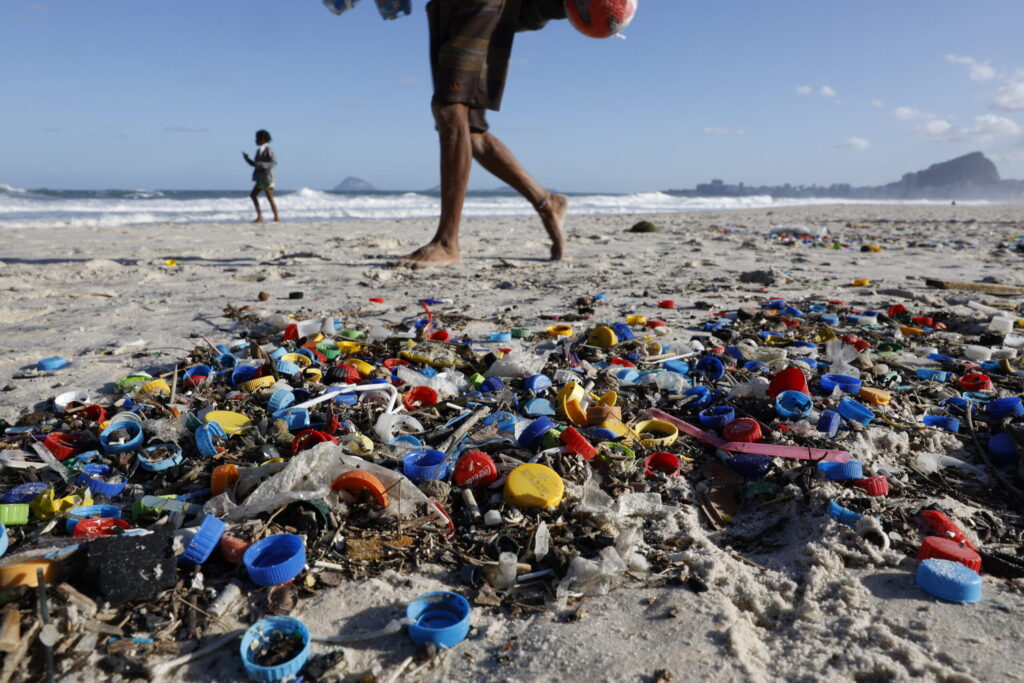
Plastic now makes up roughly 85% of all waste entering the oceans. The United Nations Environment Programme (UNEP) estimates at least 10 million tons of plastic reach the seas annually. By 2040, the amount of waste is expected to triple—threatening the oceans’ vital climate regulation role.
By 2040, plastic production could generate up to 2.8 gigatonnes of carbon per year, according to the Organisation for Economic Co-operation and Development (OECD). In that scenario, the plastics industry would account for 5% of global CO2 emissions and consume 20% of worldwide oil demand—a finite, fossil-based resource.
Yet, neither the official COP30 plenary sessions nor Brazil’s conference events will address plastic production or ways to reduce it. Environmentalists—who share the summit’s conviction about the oceans’ role in tackling climate change—are frustrated by this gap.
“COP30 acknowledged the importance of oceans in the climate debate but missed a critical opportunity to address the chief threat to the seas’ health,” said Iran Magno, campaign strategist for the environmental group Oceana.
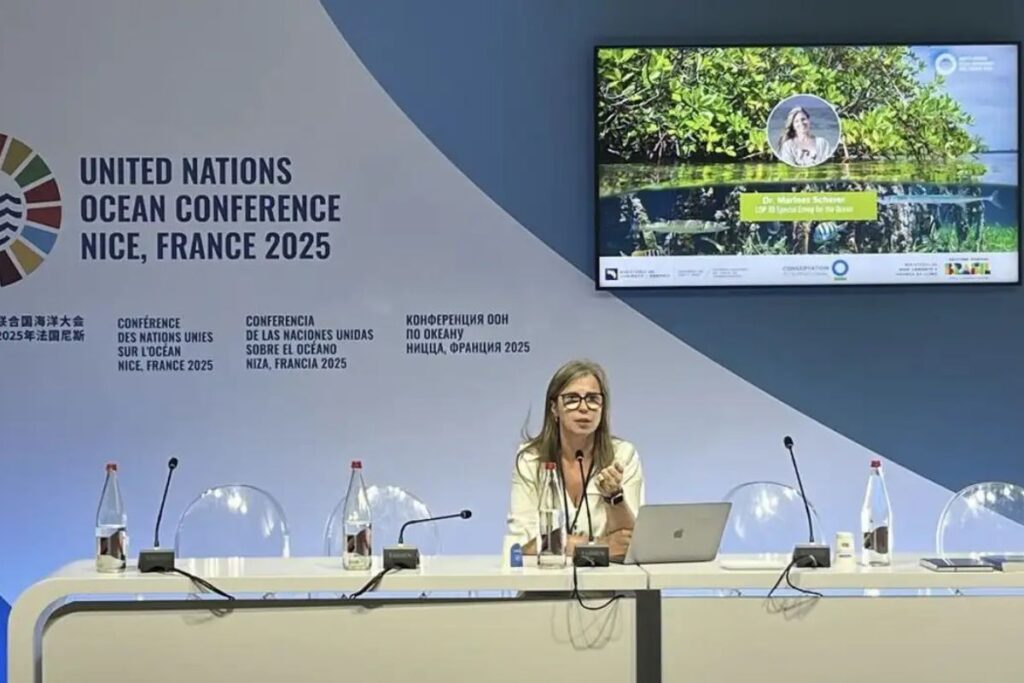
Magno is attending COP30 in Belém. In an interview with Repórter Brasil, he praised President Lula for making the oceans a focus in his speech to world leaders preceding the conference. He also welcomed the unprecedented appointment of Marinez Scherer—a Brazilian biologist and professor—as special envoy for ocean discussions, marking a first in the history of the COPs.
Still, Magno faults COP30 for focusing almost exclusively on preventing global warming through reducing greenhouse gas emissions. This narrow approach, he argues, sidelines other crucial conservation issues.
“In fact, there are very few events here that address plastics,” said Mariana Andrade, ocean campaign coordinator at Greenpeace Brasil, also in Belém for COP30. “There are extremely few.”
Plastic is absent fron UN and Brazzilian agenda
COP30 features a variety of events. Its core program includes climate negotiations among government representatives, with topics set by the United Nations Framework Convention on Climate Change (UNFCCC). Although there are discussion groups on oceans, the circular economy, waste management, and industry, none focus specifically on plastic.
“The COP30 Presidency maintains that plastics are addressed across the board in discussions about oceans, solid waste management, circular economy, and decarbonizing industry,” organizers said in a statement.
Organizers recognize that “the production, consumption, and disposal of plastics are relevant factors in global greenhouse gas emissions and ocean pollution.” Yet, they emphasize that COP lacks an “international mandate” to negotiate limits on plastic use—a subject being debated separately within the United Nations.
In August, negotiators met in Geneva, Switzerland, for another round of talks on a global treaty addressing plastic pollution. The negotiations ended without agreement.
“Plastic is indirectly on the agenda, but not directly—because the primary issue is reducing greenhouse gases,” explained Ana Paula Prates, director of the Ocean Department at Brazil’s Ministry of the Environment (MMA). She added that Brazil has no control over the schedule for the main COP30 debates between governments.
Prates said Brazil set the agenda for its two Brazil Pavilions at COP30, managed by the federal government. One is for accredited negotiators; the other is more accessible. Across the 12-day conference, the pavilions will host 286 sessions. None will address plastics.
“A council within the Office of Brazil’s Presidential Chief of Staff reviewed all proposed themes for Brazil’s COP30 Pavilions. There were over a thousand submissions,” said Prates. “There will be two events on oceans, where we’ll discuss our public policies on this environment—including the National Plastic-Free Ocean Strategy.”
This strategy will also be presented at a separate event in Belém during COP30, but outside the summit’s official agenda.
“The government has worked to ensure oceans are central to the climate agenda, but the lack of focus on plastics remains a failure,” noted Ítalo Braga, professor at the Institute of the Sea at the Federal University of São Paulo (IMar-Unifesp). “Climate concerns overshadow other priorities—but they shouldn’t,” he concluded.
Brazil shows support at COP, but resists plastic treaty
Brazil ranks eighth among the world’s top plastic waste producers, discarding roughly 1.3 million tons into the ocean annually—8% of the global total.
The Brazilian government’s stance on treaty negotiations to address plastic pollution has been ambiguous. Environmental organizations blame lobbying from the oil and chemical sectors—which oppose any caps on plastic production—for the nation’s hesitant approach.
“The Brazilian delegation’s stance in Geneva fell short by failing to join more than 100 countries supporting advanced proposals to halt the plastic disaster,” said the Life Without Plastic Coalition, a network of Brazilian civil society groups fighting ocean plastic pollution, in a statement after the negotiations. “Both civil society and the international community expected much more from the COP30 host nation.”
Held from August 5 to 15, this was the sixth round of negotiations on a legally binding treaty to tackle what is considered the world’s second greatest environmental threat after the climate emergency. When—or if—a seventh round will take place remains uncertain.
Initiated by the UN in 2022, the treaty debate has split countries into two groups: over 100 nations advocate banning single-use plastics—”disposables”—and prohibiting certain harmful chemicals used in their production.
Opposing them are oil-producing nations, which reject limits on plastic manufacturing and instead propose solutions like redesigning products and improving collection, processing, and recycling infrastructure.
Throughout the negotiations, Brazil has sent mixed signals—sometimes backing restrictions on production, sometimes resisting them out of concern for mechanisms to finance the transition in developing countries.
Brazilian officials argue that restricting disposable product manufacturing could cause job losses and cut incomes for recyclable material collectors, with repercussions for the economies of these nations. Civil society, however, says that persistent industry lobbying drives the government’s reluctance.
Ademilson Zamboni, oceanographer and director general of Oceana in Brazil, believes industry lobbying influenced the decision to exclude talks on plastics from COP30. “The chemical industry is certainly operating behind the scenes here,” he said.
This report was produced by Repórter Brasil as part of the Collaborative Socio-Environmental Coverage of COP30. Read the original report here.


