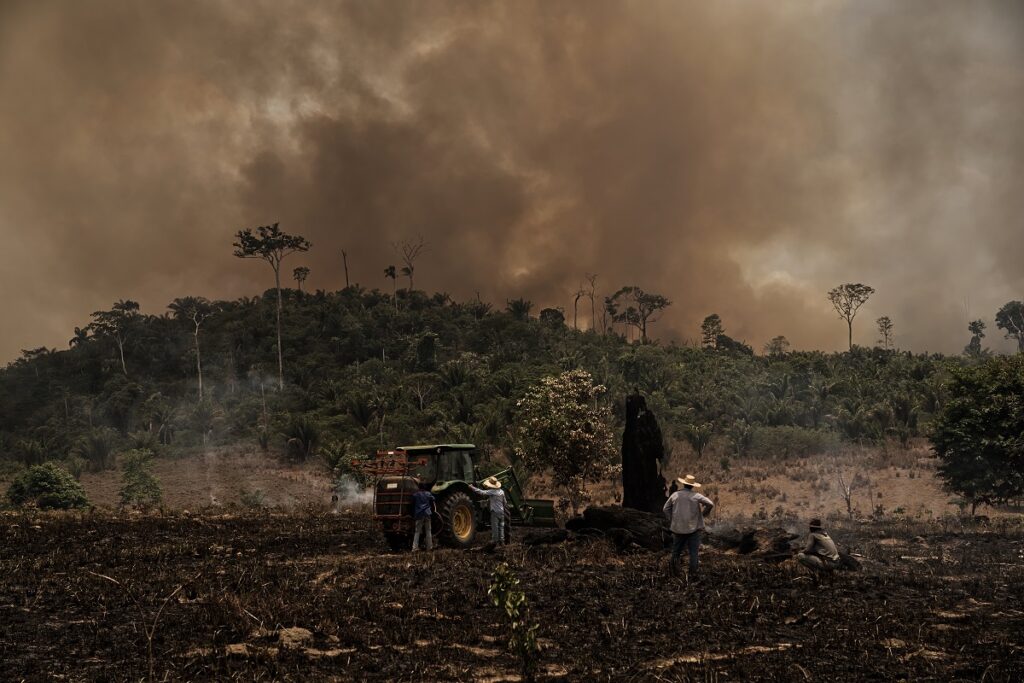

GOLD MINING COMPANIES with a recent history of environmental violations, implicated by oversight bodies in irregularities and in conflict with communities, received R$90.1 million in federal tax exemptions between 2024 and 2025, according to an exclusive survey by Repórter Brasil.
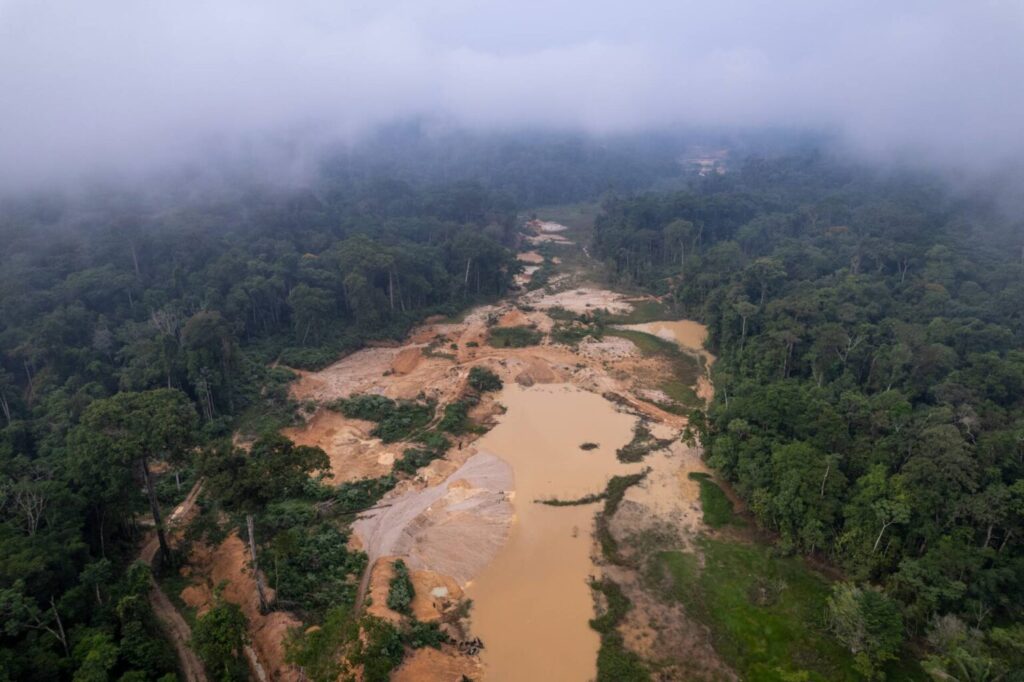
In Cuiabá, the capital of Mato Grosso, Mineração Aricá obtained tax exemptions even after an embargo registered by Ibama (the Brazilian Institute of the Environment and Renewable Natural Resources) as part of a Federal Police operation investigating the illegal use of mercury.
Another company with an active embargo imposed by the environmental agency is Mineração Aurizona S.A., which received the benefits after the company left 4,000 people without access to drinking water following the rupture of a lagoon used as a mining dam in March 2021, in the Maranhão municipality of Godofredo Viana.
Aura Almas Mineração S.A., which operates in Almas, Tocantins, ignored the existence of quilombola communities in its environmental licensing project, according to a lawsuit filed by the State Public Defender’s Office.
In 2024, the total tax breaks for the three companies totalled R$51 million (UDS 10,9 million). In 2025, they totaled R$39.1 million (USD 7,8 million). Data on federal tax benefits and waivers are publicly available and published by the Ministry of Finance.
Benefit laws do not include socio-environmental criteria
In the case of Aurizona, the benefit was granted through the Superintendency for the Development of the Amazon (Sudam), under a law created in the early 1960s to encourage the expansion of raw-material extraction sectors in the region.
Over more than 60 years in force, Law 4,216, which regulates the benefit, has undergone few changes thanks to lobbying by the sectors that benefit from it, says Alessandra Cardoso, a policy adviser at Inesc (the Institute for Socioeconomic Studies).
“These laws usually last ten years. When that deadline approaches, they [businesspeople] organize in the National Congress and renew them without any change,” Cardoso explains. She is the author of the technical note “Tax Incentives in the Amazon,” published in 2023 by Inesc, in which she points to the “questionable economic and social effects and negative environmental impacts” of this type of tax exemption.
In addition to the Sudam benefit, the three mining companies were granted incentives under the Special Regime for the Acquisition of Capital Goods by Exporting Companies (Recap), which suspends taxes on the purchase of machinery and equipment.
The laws governing both benefits do not establish socio-environmental criteria for granting them. “It is absurd [that these benefits] are renewed without environmental, social, climate or socio-environmental responsibility criteria for these companies,” Cardoso says.
For the Inesc adviser, gaps in tax incentive legislation end up financing the activities of companies with socio-environmental problems. “There are no benefits for communities, and there is not even a ban on things that are already very common in the financial sector, such as lists related to slave labor and deforestation,” Cardoso says.
In a statement sent to Repórter Brasil, Brazil’s Federal Revenue Service said that the environmental reputation of companies receiving tax incentives is assessed only when this is expressly required by the law that created the benefit, which is not the case in the examples presented in this report. “Every tax benefit is determined by law, which contains the objective criteria for granting it. It is up to the Federal Revenue Service to determine whether the applicant for that benefit meets the requirements to receive it,” the agency said.
Beneficiary has area interdicted over illegal mercury use
One of the companies benefiting from Recap is Mineração Aricá, which received R$677,800 (USD 135,540) in incentives in 2025. In 2024, the amount was R$30,800 (USD 6,159).
In November 2023, the mining company had an area embargoed and was fined R$1.5 million (USD 300,000) for submitting false information to the official system that controls the purchase and sale of mercury and for keeping the substance in violation of the law.
Ibama’s enforcement action took place as part of a development in Operation Hermes II, launched in 2023 by Ibama and the Brazilian Federal Police to investigate the illegal trade and use of mercury and other crimes, including criminal organization and association.
Highly toxic and capable of contaminating aquatic ecosystems, mercury can cause neurological, reproductive and immune-system damage in humans. By law, all legally sourced mercury must be declared and reported in Ibama’s Mercury Report system, as must purchase and sale transactions.
The embargo, registered in the district of Coxipó do Ouro, in the rural area of Cuiabá, capital of the state of Mato Grosso, remains active. Even so, the company reported payment of CFEM (Financial Compensation for the Exploitation of Mineral Resources) in 2024 for the sale of 211.2 kilograms of gold that year.
According to Ibama, the mining company is contesting the notices of violation, and the fines imposed by the environmental agency have not yet been paid. The Federal Public Prosecutor’s Office in São Paulo confirmed to Repórter Brasil that it received the Federal Police report with the results of the investigations into Operation Hermes II, but said the proceeding is under seal and that it could not confirm whether Mineração Aricá or its partners are under investigation.
Repórter Brasil sought to contact Mineração Aricá by telephone, email and through a lawyer who had previously acted in the company’s defense, but was unable to reach company representatives. Space remains open for future comment.
Dam rupture left 4,000 people without drinking water
To this day, the 4,000 residents of the community of Aurizona, a rural district of Godofredo Viana in northern Maranhão, continue to suffer the consequences of the contamination of the waters of the Tromaí River, which supplies the town. The pollution arrived in March 2021, with the rupture of the Lagoa do Pirocaua dam, controlled by Mineração Aurizona S.A.
Even with an embargo registered by Ibama since April 2021 as a result of the rupture, the mining company tops the list of tax-waiver amounts among the three companies cited in this report.
In 2025, the company received R$38.1 million (USD 7,6 million) in exemptions, most of it — R$35.9 million (USD 7,1 million) — through Sudam. In 2024, the benefit was even larger, totaling R$47.2 million (USD 9,4 million). Once again, the legislation created under Sudam accounted for the largest share, R$44.5 million (USD 8,9 million). The company also accessed Recap.
The rupture affected the district’s wells, which became unusable. The community now consumes bottled mineral water supplied by Aurizona, according to affected residents interviewed by Repórter Brasil.
“The greatest damage was to our WTS, our Water Treatment Station,” says teacher Daiane Lima Sousa, 37. “Because of our struggles, with MAB [the Movement of People Affected by Dams], they [Mineradora Aurizona] restored the WTS. But we know it will never be 100%,” she says.
The teacher says the company carried out material repair measures for residents harmed by the spill. The environmental damage is still under analysis.
Since September 2021, Aurizona, as well as the state of Maranhão, have been the targets of a Public Civil Action filed by the Federal Public Prosecutor’s Office, which seeks reparations for environmental damage.
In November 2025, the court authorized an expert assessment to determine whether the remediation measures adopted by the company were technically sufficient and whether damage remains in the area.
“The current situation of the families, with regard to water supply and the environmental quality of the region, is one of the questions that the court-ordered expert assessment must answer,” the Federal Public Defender’s Office, which is acting as an assistant to the Federal Public Prosecutor’s Office in the case, told Repórter Brasil.
While the case proceeds, the company continues to operate. Mineração Aurizona had not answered the questions sent by Repórter Brasil by the time the report was published. Space remains open for future comment.
Quilombola territories ignored
In 2024, the year in which Aura Almas Mineração S.A. obtained R$3.7 million (USD 740,000) in tax exemptions through Recap, the company’s operations in the municipality of Almas (TO) had already changed the routine of residents of the Baião quilombola community.
The noise from rock blasting disturbs those living in the area affected by the project. Heavy truck traffic on what used to be a quiet road worries residents, who fear accidents, says Maryellen Crisóstomo, who was born and raised in the Baião community and is now coordinator of the Tocantins State Coordination of Quilombola Communities (COEQTO).
The Baião community has not yet had its land regularization process completed by Incra (the National Institute for Colonization and Agrarian Reform). When that happens, the dam used by the mining company — just five kilometers from the inhabited area — will directly border the quilombo.
“No one ever came to talk to us about an escape route, a safety program or anything like that,” said Benvinda Fernandes Cardoso, 54, a resident of Baião, in aninterview for Repórter Brasil in May 2024.
At the end of 2023, the Tocantins Public Defender’s Office, together with COEQTO, filed a Public Civil Action seeking the suspension of the mining company’s activities. The lawsuit cites the lack of prior consultation with directly affected quilombola communities, as required by ILO Convention 169, as well as alleged flaws in the mine’s environmental licensing process.
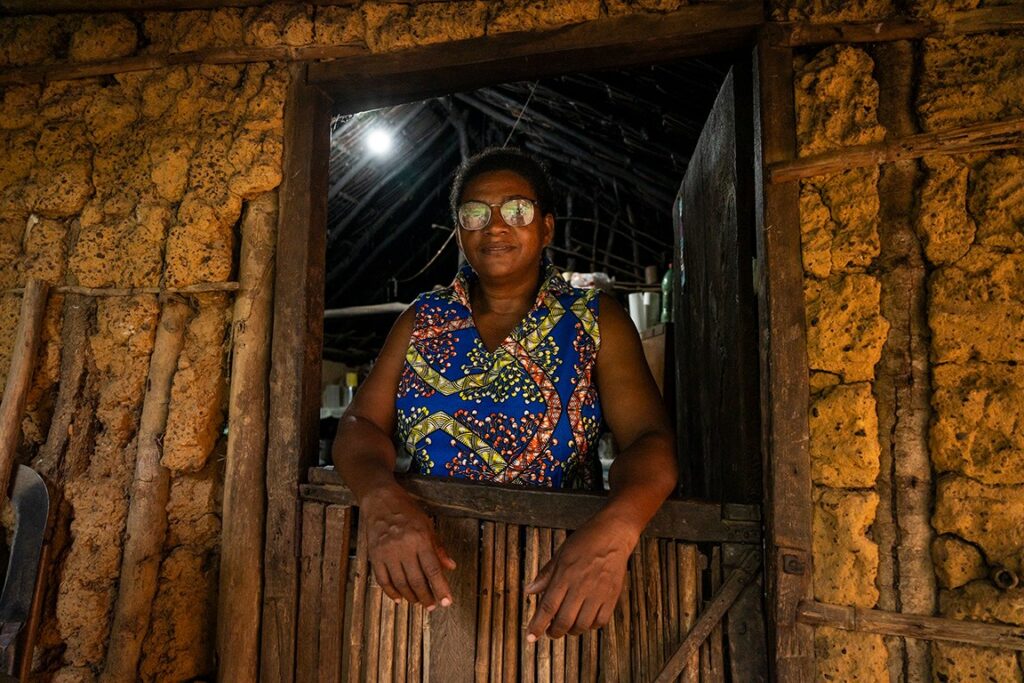
“We questioned not only the absence of a consultation process, but also the fact that this exploitation was taking place on the basis of a simplified environmental impact study, and not a full EIA/RIMA [Environmental Impact Study and Environmental Impact Report],” says public defender Kenia Martins Pimenta Fernandes, coordinator of the Agrarian and Environmental Public Defender’s Office in Tocantins.
In 2025, the Court of Justice of Tocantins rejected the preliminary injunction that sought to suspend Aura Almas’ activities until the affected communities had been heard. That year, the mining company was again granted Recap benefits, with exemptions worth R$269,600 (USD 53,920). “We lost the injunction. On the other hand, the case is moving toward a judgment on the merits,” Fernandes explains.
Also last year, the Public Defender’s Office held a conciliation hearing, where it established requirements for the company to continue operating. The request includes the preparation of a new Environmental Impact Study and the carrying out of consultation in accordance with the protocol defined by the communities. According to Fernandes, Aura Almas agreed to the proposal.
The agreement is now being formalized. In the meantime, the mining company continues to expand its exploration area among the communities. Seven new mining fronts are in the process of being opened, according to the Public Defender’s Office. In addition to Baião, four other quilombola communities are located in the impact zone: Poço Dantas, in the municipality of Almas; São Joaquim and Laginha, both in Porto Alegre do Tocantins; and Lajeado, in Dianópolis. These territories are awaiting technical studies to identify the areas of common use by the communities.
Maryellen Crisóstomo confirms that the company has been in contact with quilombolas. The results of the dialogue, however, are not always favorable to the residents of those areas. “The mining company went to Lajeado to say that, with or without consent, there will be an extraction point in the territory,” she says.In response to Repórter Brasil, Aura Almas Mineração said that its unit in Almas maintains regular operations in compliance with Brazilian law. The company said it “prioritizes regional socioeconomic development through the hiring of local labor and the strengthening of the region’s supplier chain” and that it promotes “qualification and integration initiatives that contribute to coexistence based on mutual respect and shared growth.” Regarding the Public Civil Action filed by the State Public Defender’s Office, the company added that it “fully cooperates with the authorities and that the case is following the regular judicial process.”