

MULTINATIONALS including Switzerland’s Nestlé, Germany’s Melitta and Israel’s Strauss Group — one of the companies that controls the Brazil’s 3Corações coffee brand — maintained business relationships with a Brazilian company fined 14 times by Ibama, the Brazilian environmental agency, for buying coffee and black pepper from farms that, according to the agency, grew the products in violation of environmental rules.
The penalties were imposed on Grancafé, based in Linhares, state of Espírito Santo, between April 2024 and June 2026. According to Ibama, the company received at least 1,833 60-kilogram bags of coffee and 2.46 tonnes of black pepper grown in areas placed under environmental embargoes for illegal deforestation and other damage to the Atlantic Forest.
An environmental embargo is a measure used by the agency to halt activities in areas where violations have occurred and, in cases of deforestation, allow native vegetation to recover. Ibama says farms in Jaguaré and Vila Valério, both in Espírito Santo, continued growing crops in areas already under embargo and subsequently sold their produce to Grancafé.
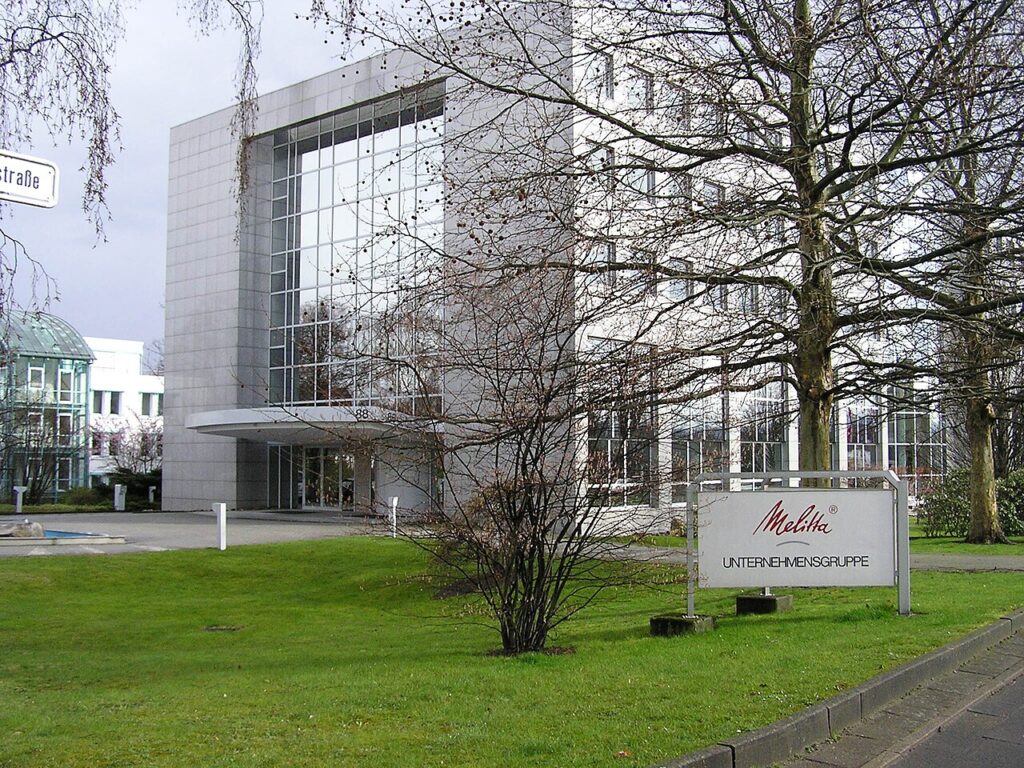
Even after being cited, the Brazilian company exported coffee to Nestlé and Strauss Group subsidiaries in Europe in 2025, according to customs data accessed by Repórter Brasil. Grancafé also appears on Nestlé’s latest supplier list, published on the Swiss company’s website in April 2026. Melitta confirmed to Repórter Brasil that Grancafé is one of its suppliers.
In response to Repórter Brasil, Grancafé said it “has never adopted a business policy of knowingly purchasing products from illegally deforested areas” and that, “when an environmental irregularity that may affect the products traded is objectively identified, appropriate measures are taken, taking into account the specific circumstances of each case”.
The company said it has submitted its defence in administrative proceedings “whenever discrepancies are identified concerning the facts, the origin of the products or the very nature of the transaction described by inspectors”.
Nestlé said it had requested clarification from the Brazilian company as soon as it became aware of the allegations. “Grancafé informed Nestlé that it had discontinued sourcing coffee from any farmer associated with embargoed areas,” its statement reads. The Swiss multinational also stressed that the farms with embargoed areas are not its direct coffee suppliers.
Melitta said it was in contact with the company and would not comment while Ibama’s administrative proceedings concerning the environmental fines remained ongoing. Strauss Group did not respond to a request for comment.
The full responses from all companies that commented can be read here.
Other buyers
Export records reviewed by Repórter Brasil show that Grancafé also continued doing business with other multinationals after receiving its first fine, including Germany’s Neumann Kaffee Gruppe (NKG), France’s Sucden Group and the US-based American Coffee Corporation. The information was obtained through ImportGenius, a platform specialising in international trade data.
Grancafé also shipped black pepper to a subsidiary of the US-based McCormick & Company, according to customs records reviewed by Repórter Brasil.
In addition, Nestlé’s supplier list published in July 2025 identifies Grancafé as an “intermediary supplier”, linked to “direct supplier” Volcafe, a multinational headquartered in Switzerland.
Asked for comment, NKG said Ibama’s citations were not related “to deforestation or environmental damage caused directly by Grancafé itself but selected sub-suppliers of them”. NKG also said its US subsidiary supplied by Grancafé “did not purchase directly from the concerned sub-suppliers”.
France’s Sucden Group, meanwhile, said it “has maintained a business relationship with Grancafé for several years” and that the penalties were still at the initial stage of Ibama’s administrative proceedings. “No final administrative decision has been issued, and the allegations remain subject to review by the competent authorities.”
McCormick & Company, a global leader in spices and seasonings, said its “purchases from Grancafé have already been substantially reduced” and that it had been “in the process of phasing out” the company from its supplier network since late 2025.
Volcafe said it was committed to “promoting sustainable and responsible practices”. “We take any concerns related to our supply chains seriously and assess them in accordance with our policies, standards and due diligence processes,” the company said.
American Coffee Corporation, also contacted, did not respond.
Repórter Brasil also contacted Sucafina, one of the world’s largest coffee trading companies. It said its last purchase of Grancafé products was in March 2024, the month before Ibama imposed the first fine. It also said it had removed the company from its list of potential suppliers.
“Maintaining a relationship with a supplier whose environmental non-compliance has been established and remains unresolved would be incompatible with Sucafina’s responsible sourcing principles,” the company said in its statement.
The full responses from all companies that commented can be read here.
Deforestation could block sales to the European Union
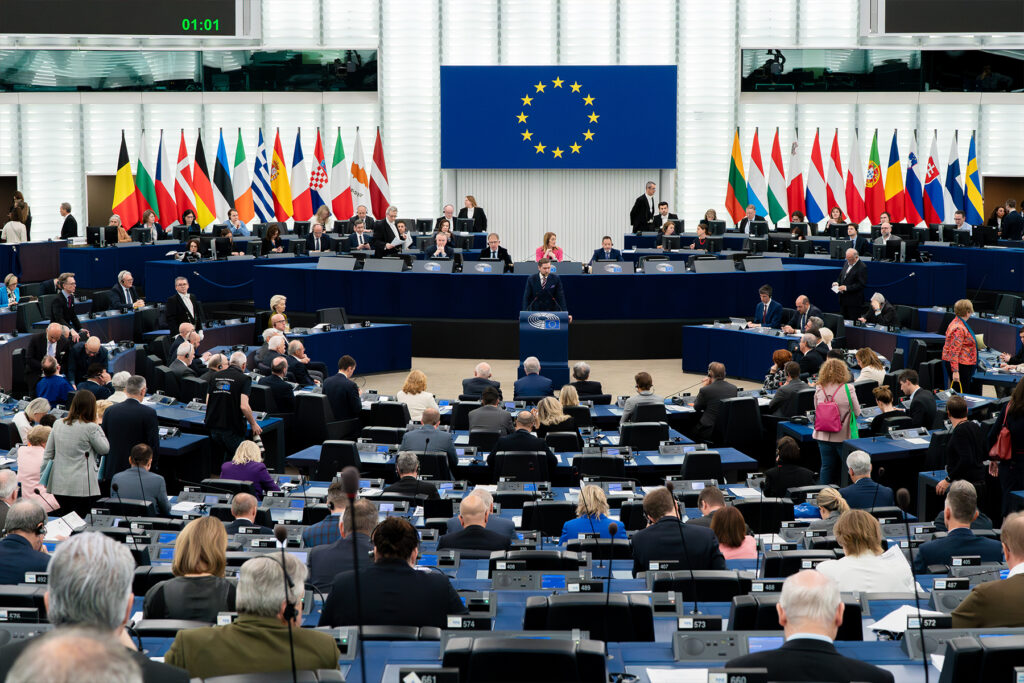
Scheduled to take effect on 30 December, a new European Union law — the EUDR, or EU Deforestation Regulation — prohibits seven commodities, including coffee, from entering the bloc if they were produced in areas deforested, legally or illegally, from 2021 onwards.
Although deforestation on the farms that supplied Grancafé occurred before that date, the new law also bans imports of these commodities if they were grown in breach of the laws of the country of production.
For that reason, the law could potentially apply to the Grancafé case if it were already in force, says Fernanda Drummond, an adviser to the Socio-Environmental Rights Programme at the NGO Conectas. However, she says this would still depend on how European authorities interpret it. “We have not yet seen this legislation tested in practice,” she cautions.
For Drummond, the citations issued against Grancafé, even though no final administrative rulings have been reached, should already provide sufficient grounds for multinationals “to scrutinise their supplier more closely”. “That would already be the case with one or two citations. With 14, they demonstrate a repeated pattern of non-compliance with the law.”
“Multinational companies such as Nestlé exert significant influence over supply chains. They have the resources and power needed to ensure that all their suppliers respect human rights and are not involved in illegal deforestation,” says Carla Hoinkes of Public Eye, an organisation based in Switzerland, where some of the sector’s largest global corporations are headquartered.
Etelle Higonnet, director of Coffee Watch, says the “apparent absence” of a stronger and more transparent response from Brazilian coffee producers to this problem is “deeply concerning”. She directs her criticism at Cecafé, the Brazilian Coffee Exporters Council.
“The Brazilian coffee industry has yet to fully acknowledge or address its historical contribution to forest loss, and its current efforts to prevent or reverse deforestation appear insufficient,” she says.
Asked for comment, Cecafé said it was committed to complying with environmental legislation and continuously improving sustainability. It also said the sector had invested significantly in traceability and due diligence mechanisms.
“A distinguishing feature of Brazilian coffee production is its ability to combine competitive production that supplies the global market with the conservation of natural resources,” the council said in its statement (read the full response here).
Tarcísio Feitosa, a coordinator of the Forests & Finance Coalition, stresses buyers’ responsibility when faced with evidence that products were “illegally sourced”. “If a company buys products from embargoed areas, the same principle applies as when buying cattle from Indigenous land or a protected area, because the product should not have been grown there. It was illegally sourced,” he says.
He links Ibama’s delays in issuing rulings in administrative proceedings to staff shortages. In addition, the specialist says, “environmental fines are generally quite high, and there are lawyers who specialise in delaying rulings”. In 2024, the environmental agency had 124,998 ongoing administrative cases, 18.6% of which were at risk of becoming time-barred over the following two years, according to its 2024 Management Report.
Repórter Brasil asked Ibama about the status of the administrative proceedings related to the 14 citations issued against Grancafé, the grounds for the citations and the expected timeframe for rulings, but received no response.
On its website, the Brazilian company displays the seal of certification body 4C, which sets economic, social and environmental criteria for responsible coffee production. The organisation told Repórter Brasil that “Grancafé itself does not hold a 4C certificate”, but provides services to a certified group of producers and is subject to the scheme’s requirements and audits.
4C also said that buying products from embargoed areas was incompatible with its Code of Conduct and pledged to investigate the information. If it finds breaches of the rules, it said, it may take measures affecting Grancafé’s participation in the certification scheme (read the full response here).
Tax benefits retained
According to information published by Brazil’s Federal Revenue Service, Grancafé received around R$148.5 million (approximately US$ 29,8 million) in tax benefits, incentives and exemptions between 2024 and 2026. The amount reflects legally prescribed reductions in payments of corporate income tax, contributions to the Social Integration Programme and the Public Servant Asset Formation Programme (PIS/Pasep), and the Contribution for Social Security Financing (Cofins).
The benefits used by the company are based on different legal provisions, and the rules do not stipulate that environmental citations awaiting a ruling are, in themselves, grounds for denying access to the incentives.
In 2020, based on a technical assessment by Sudene, the Superintendency for the Development of the Northeast Region, the Federal Revenue Service recognised Grancafé’s entitlement to a 75% reduction in corporate income tax on operating profits from a business operation in Linhares, state of Espírito Santo, for the calendar years 2018 to 2027.
Under Brazilian Law No. 9,605/1998, companies convicted of environmental crimes are barred from receiving tax incentives. The National Environmental Policy is broader, providing for the withdrawal or restriction of tax benefits for those who fail to comply with measures necessary to preserve the environment or remedy damage caused by environmental degradation.
Repórter Brasil asked Sudene and the Federal Revenue Service whether the violations attributed to Grancafé could affect the benefits the company receives. Sudene said it “will request clarification from the company and review the relevant documentation within its remit”.
“If evidence is identified that requires assessment by other competent authorities, the information may be forwarded to the responsible institutions for appropriate action,” Sudene said in its statement (read the full response here). The Federal Revenue Service did not respond to reporters’ request for comment.
25 anos investigando para mudar.
A Repórter Brasil já ajudou a impulsionar leis, fortalecer direitos e combater o trabalho escravo.
Em 2026, fazemos 25 anos — e vem muito mais por aí!