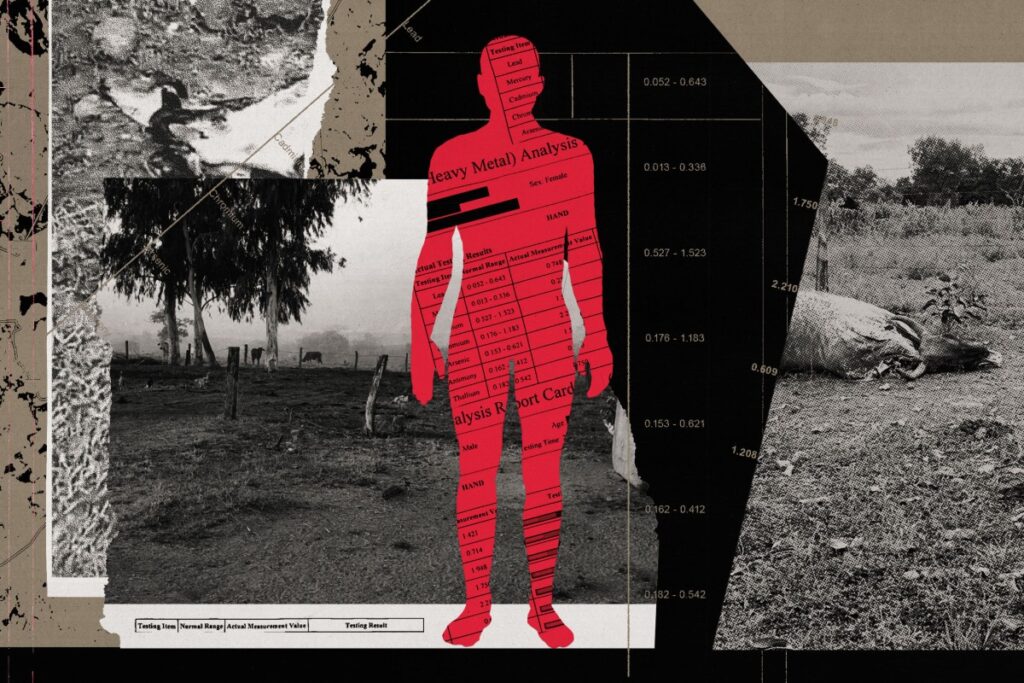
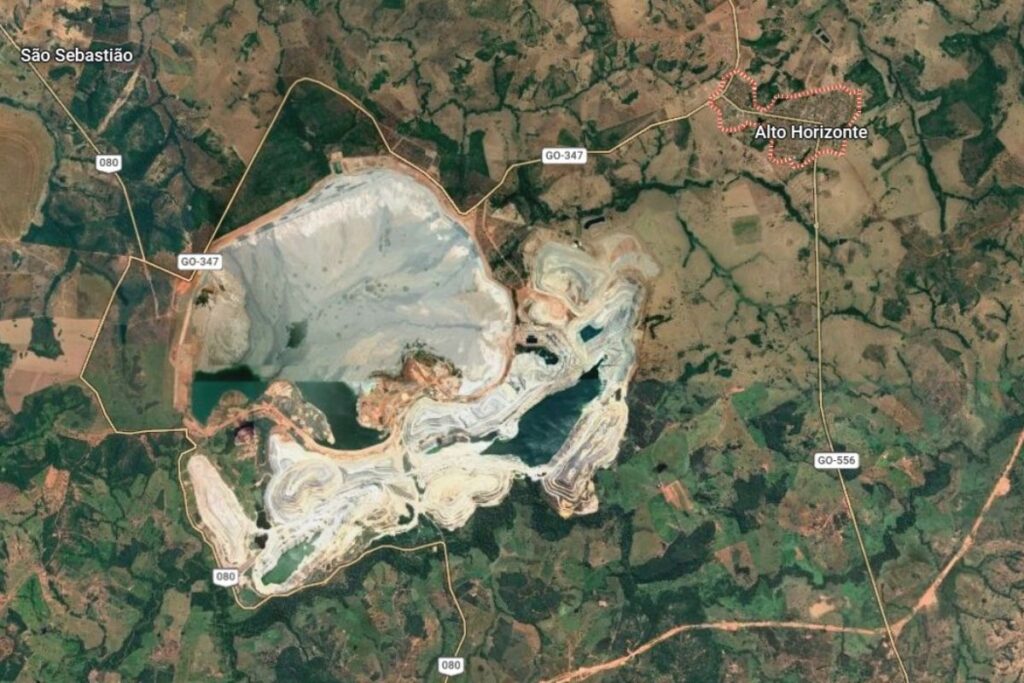
MINERAÇÃO MARACÁ, a subsidiary of Canadian mining multinational Lundin Mining, is facing two public civil lawsuits alleging potential harm to residents’ health and the environment caused by the Chapada Mine, a copper and gold operation in Alto Horizonte, a municipality of 6,000 inhabitants in the northern part of Goiás state, central Brazil.
Medical and laboratory tests carried out on residents living near the mine in 2025 detected toxic substances, including arsenic and lead, in their bodies. The results were submitted as evidence in a public civil lawsuit filed in August 2026 by Association of People Affected and Contaminated by Pollution Resulting from Mining Activities in the State of Goiás (ACPRAM) against Mineração Maracá. A second lawsuit was filed in September by Brazil’s Federal Prosecutor’s Office (MPF).
“I used to cycle 60 kilometers a day. Now I can barely manage to clean my house,” says cattle farmer Célia Gonçalves da Silva Alves, 53. She is a member of the association, which suspects that exposure to heavy metals occurs through contact with dust generated by mining activities, consumption of contaminated water, and ingestion of food produced on farms surrounding the operation.
Since 2023, the Goiás State Prosecutor’s Office (MPGO) has also been investigating possible irregularities involving the Chapada Mine and is preparing another public civil lawsuit. The investigation, which comprises more than 8,000 pages, identifies potential risks to human health and animal deaths possibly linked to heavy metal contamination, as well as failures to comply with the mine’s environmental license conditions.
“The company’s liability is strict. If the mining operation didn’t exist, these problems wouldn’t exist either,” says prosecutor Suelena Carneiro, coordinator of the MPGO’s Special Environmental Protection Task Force. “The harm to the population’s health still needs to be assessed. That requires complex expert analysis,” she adds.
Between 2023 and 2025, the Goiás State Secretariat for the Environment and Sustainable Development (Semad) issued 15 notices of violation against Mineração Maracá. The mining company also received six embargo orders from the environmental agency in 2024, five of them for clearing native vegetation without authorization, covering a total of 173 hectares. Embargo orders are intended to prevent activities in areas where violations have occurred and, in deforestation cases, to allow native vegetation to recover.
Operating since 2007, the Chapada Mine was acquired by Lundin Mining in 2019 and exports copper concentrate to countries in Asia and the European Union.
Landowners neighboring the operation say the impacts have worsened over the past five years as mining activities have expanded. The Chapada Mine’s annual revenue increased by 33.7% in 2025, reaching US$665.3 million. That year, the mine produced 43,900 metric tons of copper and 61,300 ounces (approximately 1.91 metric tons) of gold, accounting for 13% of Lundin Mining’s global copper production and 43% of its gold production.
In response to questions from Repórter Brasil, Lundin Mining, speaking on behalf of Mineração Maracá, said the company is “committed to the health, safety and well-being of neighboring communities, as well as to environmental protection.” The mining company also stated that it “has been cooperating” with regulatory and investigative authorities “by providing the requested information and technical documents.”
The company did not address residents’ specific allegations of possible heavy metal contamination resulting from activities at the Chapada Mine, nor did it answer questions about the environmental impacts identified by public authorities. “The matters raised are still being examined by the competent authorities, and it would not be appropriate to anticipate conclusions regarding the facts or the attribution of any potential responsibility,” the statement reads. (Read the full statement from Lundin Mining and Mineração Maracá.)
Heavy metals detected in residents’ laboratory tests
The first symptoms Célia Alves noticed were hair loss and weakened nails. “My tests showed high levels of lead around 2020. Later, arsenic and other substances appeared,” says the resident, who currently has two thyroid nodules and has already undergone surgery to remove four others from her abdomen and legs.
In October 2025, Alves underwent another test, reviewed by Repórter Brasil, which identified levels of lead, arsenic, chromium, antimony, cadmium and thallium above reference ranges. All these elements, which can be released into the environment through mining activities, are potentially toxic to human health.
Arsenic, cadmium and certain chromium compounds are classified as carcinogenic to humans by the International Agency for Research on Cancer (IARC), which is part of the World Health Organization (WHO). Alves’s thallium concentration was described in her test results as “severely abnormal.” Highly toxic, the metal can cause damage to the nervous system, visual disturbances and hair loss, according to the US Agency for Toxic Substances and Disease Registry (ATSDR).
“This year alone, I’ve had pneumonia four times. My lungs are damaged, and my eyesight is deteriorating,” she says. “Don’t our lives matter? How many people have to die before the mining company does something?” she asks.
According to IARC, prolonged exposure to arsenic can cause skin, lung and bladder cancer. Scientific studies have also documented damage to the optic nerve and impaired vision.
Suspected deaths and demands for relocation
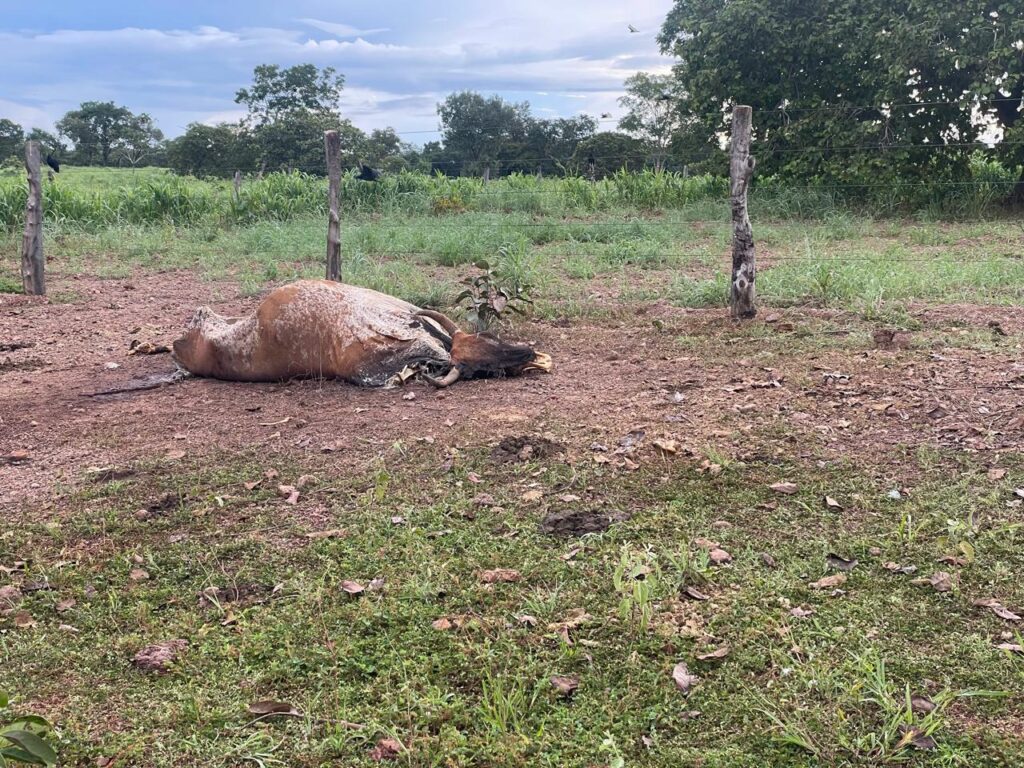
In addition to health problems, residents report water shortages, cattle and fish deaths, damage to their homes and noise pollution caused by daily blasting at the mine.
“The dust is constant. Our properties have been placed under restrictions [by the Municipal Health Surveillance Authority]. Our cattle can no longer drink that water, but we have no means of moving them elsewhere,” explains Esmoir Nazário Alves, president of ACPRAM.
Alves also reports allergies and the sudden appearance of blisters on his back. In a test conducted in October 2025, the arsenic concentration in his body was classified as “severely abnormal.”
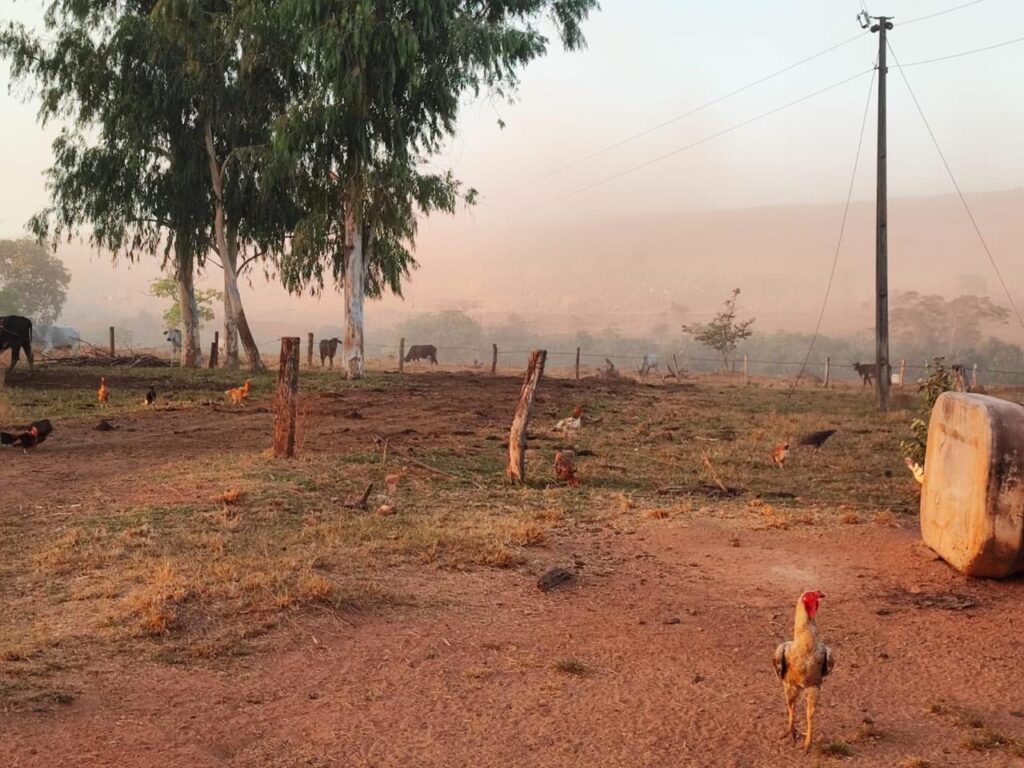
Residents who previously relied on cisterns have had to drill wells. “Over the past four years, the streams around here have started drying up,” says cattle farmer Wander Marques da Silva, who attributes the lowering of groundwater levels to the increasingly deep open pits excavated by the mining company.
“Today, I can only keep a third of the cattle I could otherwise raise because the pasture is dying. How am I supposed to make a living from this land?”
In the lawsuit filed in August, ACPRAM is seeking the relocation of five affected families, as well as medical treatment and compensation. To support its claims, the association submitted laboratory results, expert reports and technical assessments signed by environmental engineers and veterinarians.
The documents describe, for example, the “extreme acidification” of a stream that supplies three farms in the community, which “increases the solubility and toxicity of heavy metals.” They also report the loss of more than 130 animals, “associated with the consumption of contaminated water and pasture.”
Dust, one of residents’ main complaints, is described in the lawsuit as toxic and originating from the Chapada Mine’s “waste piles, blasting and crushing operations.”
Association members also suspect that exposure to toxic substances contributed to the deaths of at least three people over the past five years.
“Two of the people who died were my clients, and their families reported the presence of heavy metals [in their bodies],” says attorney Adriano Alves de Paula e Silva, who represents ACPRAM in the lawsuit.
The Goiás State Health Secretariat (SES) told Repórter Brasil that it had conducted a technical visit to the municipality. According to the department, “the available technical evidence does not allow a causal link to be established between the symptoms reported by residents and mining activities.”
The department also stated that there had been no official reports of heavy metal poisoning in the municipality over the past five years.
Repórter Brasil forwarded to SES the accounts of the three deaths mentioned by residents. In light of the information provided, the department said it would request clarification from the Municipal Health Secretariat “to determine whether a specific epidemiological investigation is warranted for each case.” Read the full statement here.
Federal Police investigate potential criminal liability
In July, the Federal Prosecutor’s Office (MPF) opened an investigation into possible social and environmental damage caused by the Chapada Mine. At the same time, it asked the regional office of Brazil’s Federal Police (PF) to investigate potential criminal liability for pollution.
The Federal Police confirmed to Repórter Brasil that a criminal investigation had been opened and that “the necessary investigative steps are being carried out to clarify the facts.”
That same month, the MPF recommended that Semad and the National Mining Agency (ANM) inspect the mine’s facilities. The prosecutors also requested urgent measures from Mineração Maracá to eliminate risks to affected residents.
Following a court order in September, the mining company offered to supply families with water delivered by tanker trucks, but ACPRAM members rejected the proposal. In addition to considering the volume insufficient, they argued that there were no guarantees that the water provided would be free from contamination.
While awaiting a response to their request for relocation, the families are demanding an adequate supply of bottled mineral water to meet their needs.
Federal prosecutors seek urgent measures
In August, the ANM published a report identifying signs of acid mine drainage at the Chapada Mine. The phenomenon occurs when certain minerals in rocks react with water and oxygen, generating acidity and facilitating the release of metals that can contaminate rivers and groundwater.
Following a joint inspection with Semad and the Federal Police, the agency found that the company was maintaining waste rock piles without the required drainage system. Despite these findings, however, the agency did not issue a notice of violation against the company.
In response to the lack of action, the MPF filed a public civil lawsuit in September against Mineração Maracá and the ANM, seeking urgent measures to prevent mining waste from reaching the Rio dos Bois, one of the region’s main waterways.
The request for urgent measures has yet to be ruled on by the court. The Federal Civil and Criminal Court of Uruaçu, Goiás, ordered the defendants to consider submitting a settlement proposal.
Repórter Brasil contacted federal prosecutor Aldo de Campos Costa, who is responsible for the MPF lawsuit, but he declined to comment. The Uruaçu court did not respond to requests for information about the case.
As investigations into the Chapada Mine’s potential social and environmental impacts proceed on several fronts, Lundin Mining received the Brazilian Mining Best Practices Award from the Brazilian Mining Institute (IBRAM) on October 20. The company won first place in two categories – Decarbonization and Energy Efficiency, and Tailings and Waste Rock Disposal – and was a finalist in the Process Safety category.
In response to Repórter Brasil, the ANM said that the recommendation to issue a notice of violation against Mineração Maracá remains under review and that “the absence of an immediate notice does not mean that the irregularities identified during the inspection have been dismissed.”
The agency said it conducted further inspections in September, issued formal notices and required corrective and preventive measures. According to the ANM, no imminent risk was identified at the tailings dam. Read the full statement here.
IBRAM was questioned about its decision to award a company whose Brazilian operation faces lawsuits over potential social and environmental damage, including a record of violations related to tailings management. The institute had not responded by the time of publication.
Repórter Brasil also requested comment from Semad, the government agency responsible for environmental licensing and monitoring compliance with the operation’s environmental license conditions. No response had been received by the time this article was published.
The Alto Horizonte Municipal Health Secretariat also did not respond.

25 years investigating to make a difference.
Repórter Brasil has already helped to promote laws, strengthen rights, and combat slave labor.
In 2026, we will be 25 years old — and there’s much more to come!