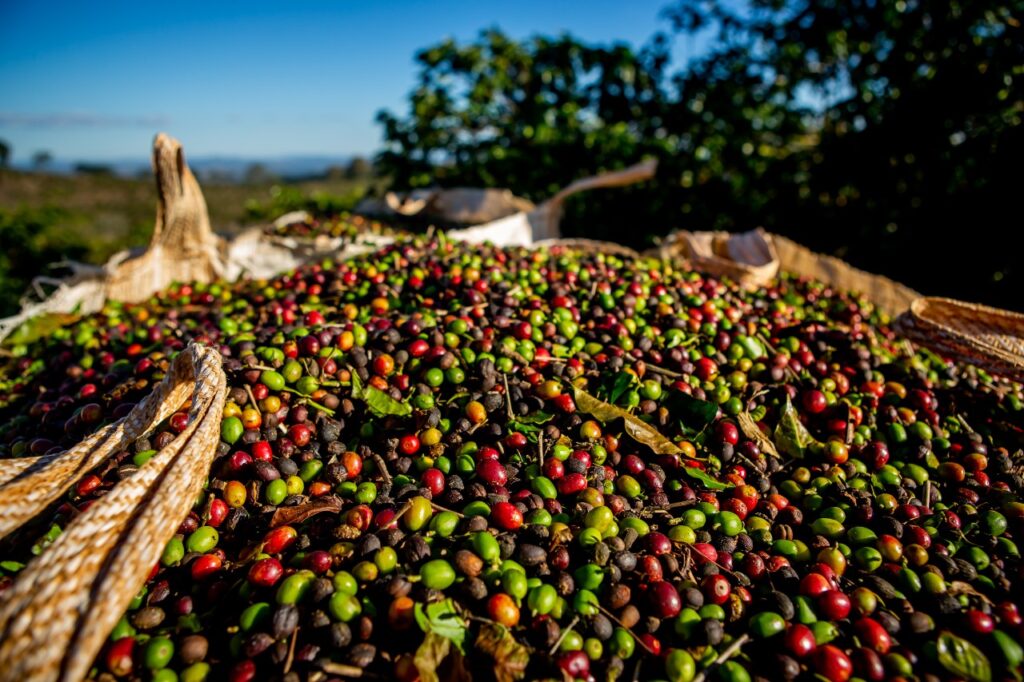

THE TOCANTINS State Public Prosecutor’s Office is awaiting the completion of two expert reports to determine whether construction works carried out by Pedro Afonso Bioenergia, a subsidiary of BP Bionergy, caused environmental degradation at Gorgulho Farm, in the municipality of Pedro Afonso, on the banks of the Tocantins River, in the Tocantins State, Brazil.
BP Bionergy is a bioenergy company controlled by BP, the British fossil fuel multinational. BP assumed full control of the Brazilian operation in 2024 after acquiring Bunge’s 50% stake in the former BP Bunge Bioenergia joint venture. Focused on producing ethanol, sugar, and bioelectricity from sugarcane, the company operates 11 industrial facilities across five Brazilian states.
According to complaints submitted anonymously to the Tocantins State Public Prosecutor’s Office (MP-TO) in September 2025 and first reported by Jornal Opção Tocantins, the installation of a water pipeline intended to irrigate sugarcane plantations and supply water to Pedro Afonso Bioenergia’s biofuel plant allegedly altered the natural flow of local waterways, destroyed springs, and affected fish breeding areas in the Tocantins River.
In May 2026, a new complaint, filed by the estate of the owner of part of the land where the project is being carried out, accused the company of clearing approximately 5,000 hectares of the Cerrado biome—the equivalent of approximately 7,000 football fields—to establish crop rotation areas intended for irrigation. The deforestation allegedly took place without environmental studies proportionate to the scale of the intervention.
Company denies wrongdoing
In a statement submitted to the MP-TO, Pedro Afonso Bioenergia denied any wrongdoing and said the works are part of “a standard agricultural irrigation project” licensed by Naturatins (the state environmental agency), and monitored by the competent authorities.
In a statement sent to Repórter Brasil, Pedro Afonso Bioenergia reiterated the arguments presented to the MP-TO but did not answer questions regarding the impacts of the water pipeline system or the allegation that 5,000 hectares had been cleared. The company also did not respond to questions about whether it had consulted the Xerente Indigenous people who live in the region (read the full response here).
In the Simplified Environmental Study submitted by the company to Naturatins and reviewed by Repórter Brasil, Pedro Afonso Bioenergia stated that no vegetation clearance would be necessary to implement the irrigation system. The project’s Installation License authorizes Naturatins to suspend or revoke the permit in the event of “the omission or false description of relevant information that served as the basis for issuing the license.”
Pedro Afonso Bioenergia’s plant is certified under RenovaBio, the Brazilian government’s national biofuels policy, which allows companies to sell a type of carbon credit known as CBIOs. The sale of CBIOs is based on the greenhouse gas emissions avoided by replacing fossil fuels with renewable sources such as sugarcane ethanol. However, certified producers must demonstrate that the biomass used does not originate from areas that have been recently deforested.
According to Repórter Brasil‘s reporting, if irregularities are confirmed in areas or data included in the certification process, the certification could be reviewed or revoked.
:: Read also: BP sugar mill in Brazil could lose certification if environmental damage is proven ::
A series of warnings
The plant’s environmental licensing process began in December 2023. In May 2024, Naturatins notified the company of pending requirements, including the absence of a water-use permit from the National Water and Basic Sanitation Agency (ANA), which authorizes water withdrawals from federally administered rivers. ANA confirmed to Repórter Brasil that it issued two such permits in the following months, while three additional permits were granted in 2025—therefore after the project’s Installation License had been approved in November 2024.
In addition, according to documents reviewed by Repórter Brasil, the land registry certificates attached to the licensing process showed that Pedro Afonso Bioenergia did not hold registered ownership of the land. This, in itself, does not prevent environmental licensing, provided there is proof of lawful possession with the landowner’s consent.
In February 2026, Naturatins’ legal department issued a legal opinion concluding that “the documentation included in the case file is insufficient to prove ownership [by Pedro Afonso Bioenergia].”
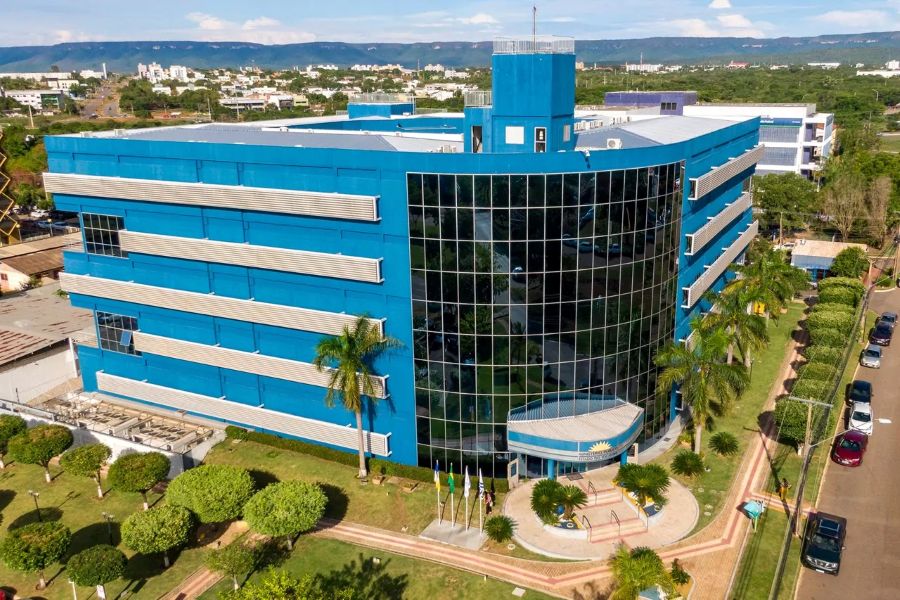
In March, the agency’s technical licensing department issued a technical opinion reaching the same conclusion and gave the company 30 days to regularize its documentation by confirming, among other requirements, lawful possession of the land or the landowner’s consent for the project. The notice included an explicit warning that failure to comply would result in the revocation of the licenses. The deadline expired on April 24, 2026.
In May 2026, a new legal opinion issued by Naturatins’ legal department reiterated that the documentation remained insufficient, added that the company’s claim of possession had been “legally weakened” by an ongoing dispute with the landowner reflected in public records, and formally recommended the temporary suspension of the environmental licensing process.
In response to questions from Repórter Brasil, Naturatins merely stated that the licensing process remains under regular review in accordance with the technical, legal, and administrative procedures established under environmental legislation (read the full response here).
According to the MP-TO, a preliminary injunction issued by the 1st Public Treasury Court of Palmas, Tocantins, granted a request by Pedro Afonso Bioenergia and ordered Naturatins not to suspend or reject the licensing process, which therefore remains ongoing.
Potential impacts on Indigenous land
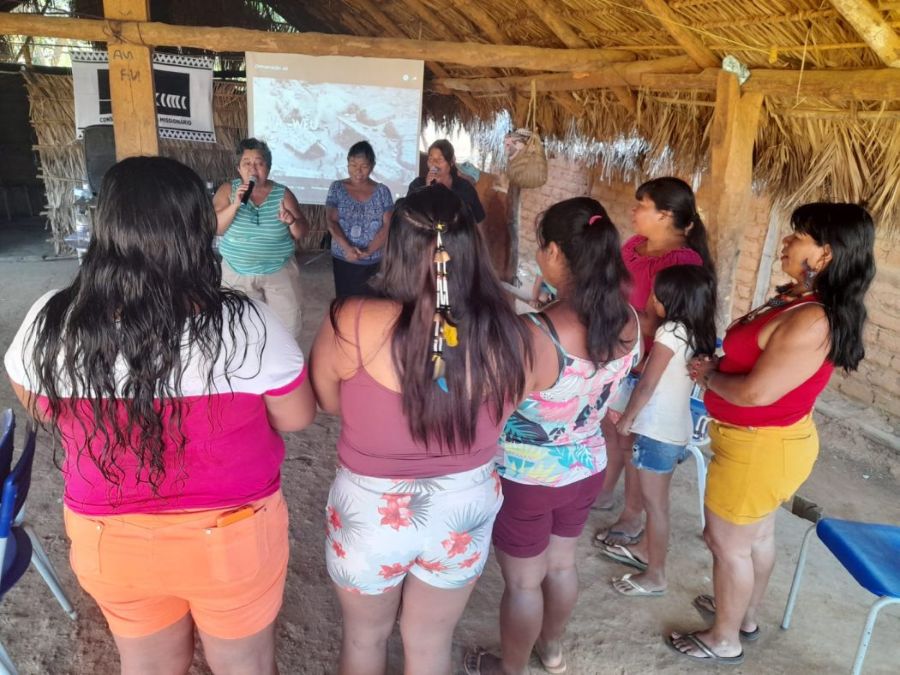
Another issue involving Pedro Afonso Bioenergia’s irrigation project concerns its potential impacts on the Xerente Indigenous Territory. According to an open letter published in June this year by the Student Front in Defense of the Tocantins River and the Environment, the project is located within a 10-kilometer radius of the territory, a distance that, under Interministerial Ordinance No. 60/2015, requires the National Foundation of Indigenous Peoples (Funai) to issue an opinion as part of the environmental licensing process.
According to the letter, Funai did not respond to an official request on the matter that Naturatins had sent within the regulatory deadline. The continuation of the licensing process without that opinion would, according to the Student Front, violate International Labour Organization (ILO) Convention 169 and Article 231 of Brazil’s Federal Constitution, which guarantee traditional communities the right to free, prior, and informed consultation regarding projects that may affect their territories.
In response to questions from Repórter Brasil, Funai’s office in Palmas, Tocantins, stated that the Student Front’s complaint alleging violations of the rights of the Indigenous peoples of the Xerente Indigenous Territory is under review by the General Coordination for Environmental Impact Assessment in Brasília (Federal District) (read the full response here).
BP investors remain silent
BP is a publicly traded company whose shares are listed on the world’s major stock exchanges. Asked by Repórter Brasil about the allegations, BP shareholders did not comment directly on the potential environmental damage allegedly caused by the multinational’s Brazilian subsidiary.
One of the company’s largest shareholders is Norges Bank Investment Management (NBIM), which manages the world’s largest sovereign wealth fund on behalf of the Norwegian government. In a statement to Repórter Brasil, NBIM said only that it maintains climate and nature guidelines for all companies in its portfolio, but does not comment on individual investments (read the full response here).
In a document outlining its expectations on nature for portfolio companies, the fund states that companies should “demonstrate that they have eliminated deforestation from their operations and value chains” and respect “the right of Indigenous peoples to free, prior and informed consent.”
According to data from LSEG, the global financial markets infrastructure and data provider, investment managers BlackRock, Elliott, and Vanguard ranked among BP’s largest shareholders in 2025. None responded to Repórter Brasil‘s requests for comment.
In its official stewardship guidance on natural capital, BlackRock states that it expects companies with significant impacts on natural habitats to “publish no-deforestation policies and biodiversity strategies.” Vanguard, meanwhile, says that corporate boards should exercise “ongoing oversight of material risks”—including environmental risks—that could affect long-term investment returns.
Elliott, for its part, does not publish environmental or social commitments. On the contrary, the firm has been pressing BP to abandon its renewable energy ambitions and refocus on oil and gas production—a campaign that coincided with the British multinational’s 2025 announcement that it would cut approximately US$5 billion a year from its low-carbon investments.
Eduardo Trevisan, a specialist in agricultural supply chains and biofuels at Imaflora, a Brazilian organization that works on certification, auditing, and environmental and social sustainability, criticized BP’s investors for remaining silent in the face of the allegations involving the company’s Brazilian subsidiary.
According to Trevisan, investors have a range of monitoring tools at their disposal. “Precisely to reduce environmental and social risks, investors can require prior assessments, due diligence, and audits before financing a processing plant or an agricultural or forestry operation,” he said.
Merel van der Mark, coordinator of Forests & Finance, an international coalition that monitors financial flows linked to deforestation, said financial institutions exposed to a global company have an obligation to assess environmental and social risks at its local subsidiaries.
“That oversight should continue even after the financial relationship has been established, especially when one of those operations becomes the target of an environmental investigation,” she said.

25 anos investigando para mudar.
A Repórter Brasil já ajudou a impulsionar leis, fortalecer direitos e combater o trabalho escravo.
Em 2026, fazemos 25 anos — e vem muito mais por aí!