

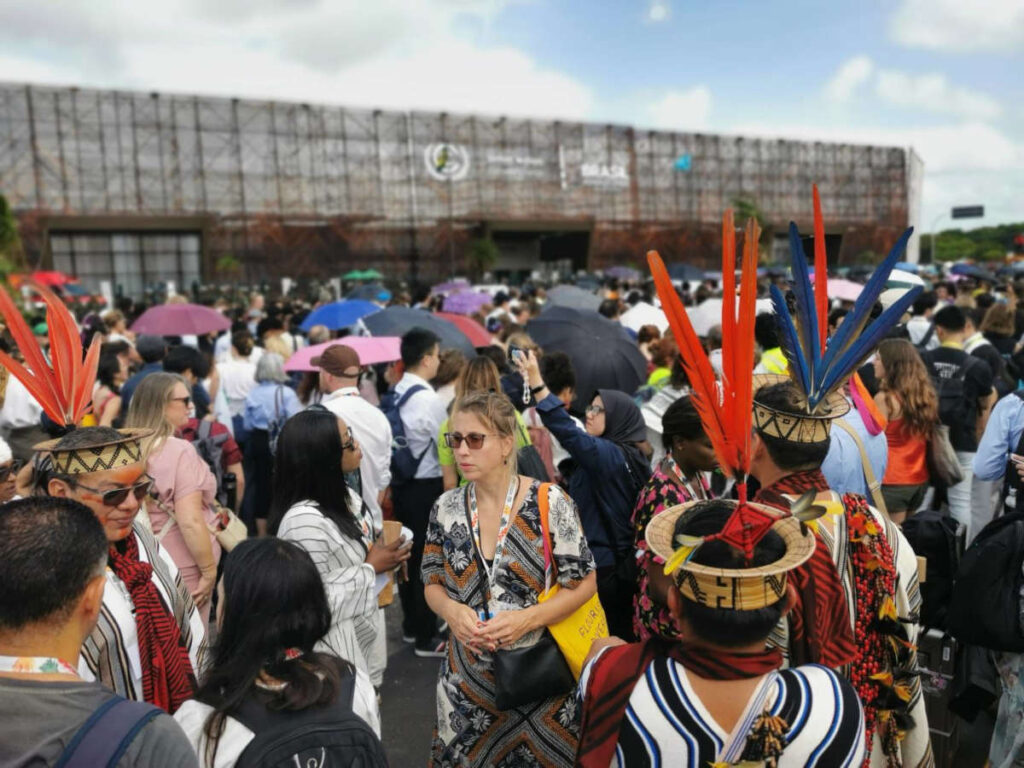
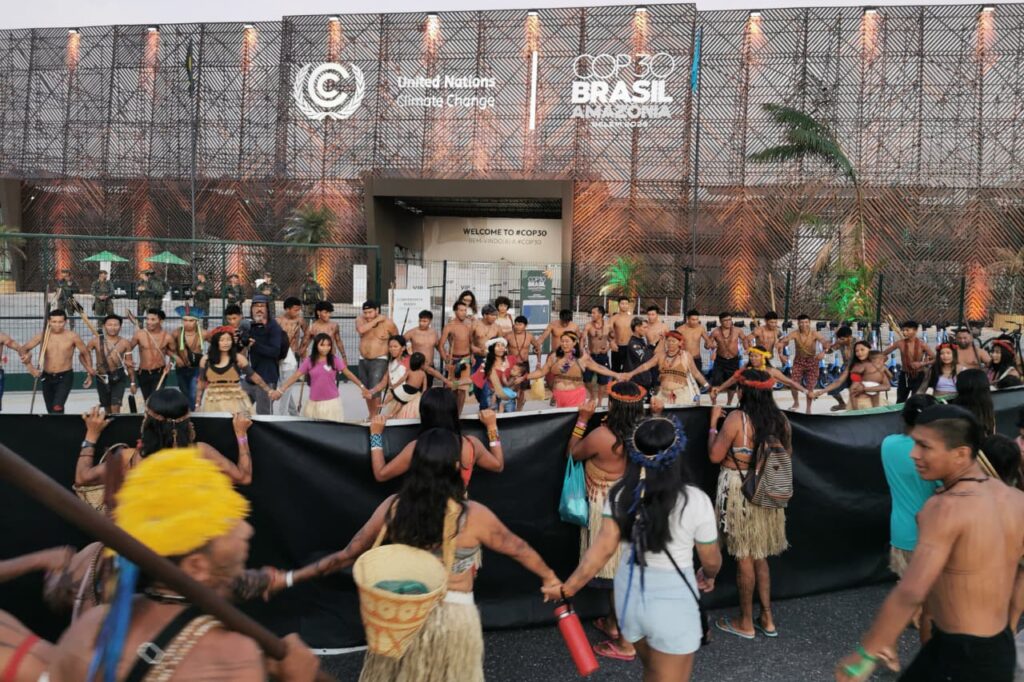
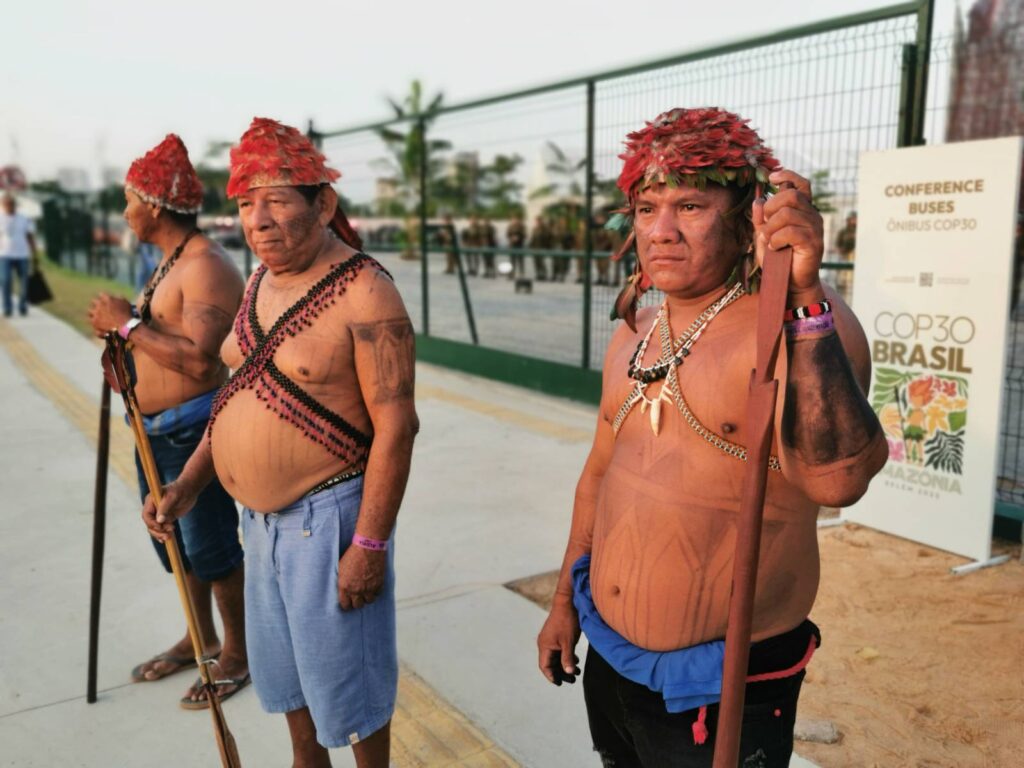
Early Friday morning (Nov. 14), dozens of Munduruku from villages near the towns of Itaituba and Jacareacanga, both also in host state Pará, gathered outside the locked gates of the COP30 Blue Zone in Belém to protest.
The protest blocked access to the United Nations climate conference’s main pavilion for about four hours. After COP30 president André Corrêa do Lago arrived and negotiated with the Munduruku delegation, the entrance reopened around 9:30 a.m. Indigenous leaders requested urgent talks with President Lula, declaring they would not leave until they got a meeting with authorities.
The Munduruku’s protest targeted Brazil’s federal government, which they accuse of permitting the advancement of large-scale projects without free, prior, and informed consultation with Indigenous communities. They oppose new waterways, private ports, carbon credit initiatives, agribusiness, and the Ferrogrão railroad—a $3.8 billion (R$20 billion) project connecting grain-producing municipalities in Brazil’s heartland of Mato Grosso to river cargo terminals in Pará, from where it can reach Brazil’s Atlantic coast.
Ambassador André Corrêa do Lago, the COP30 president, and executive director Ana Toni arrived at the scene around 8:30 a.m. to negotiate with the protesters.
They spoke with activists Maria Leusa Kaba Munduruku and Alessandra Korap Munduruku, and other leaders. At one point, Lago cradled Maria Leusa’s youngest son.
After a brief exchange, COP officials and the Munduruku delegation moved to a private area for further negotiations. Within minutes, protesters lifted the blockade at the Blue Zone entrance.
‘Our forest is not for sale’
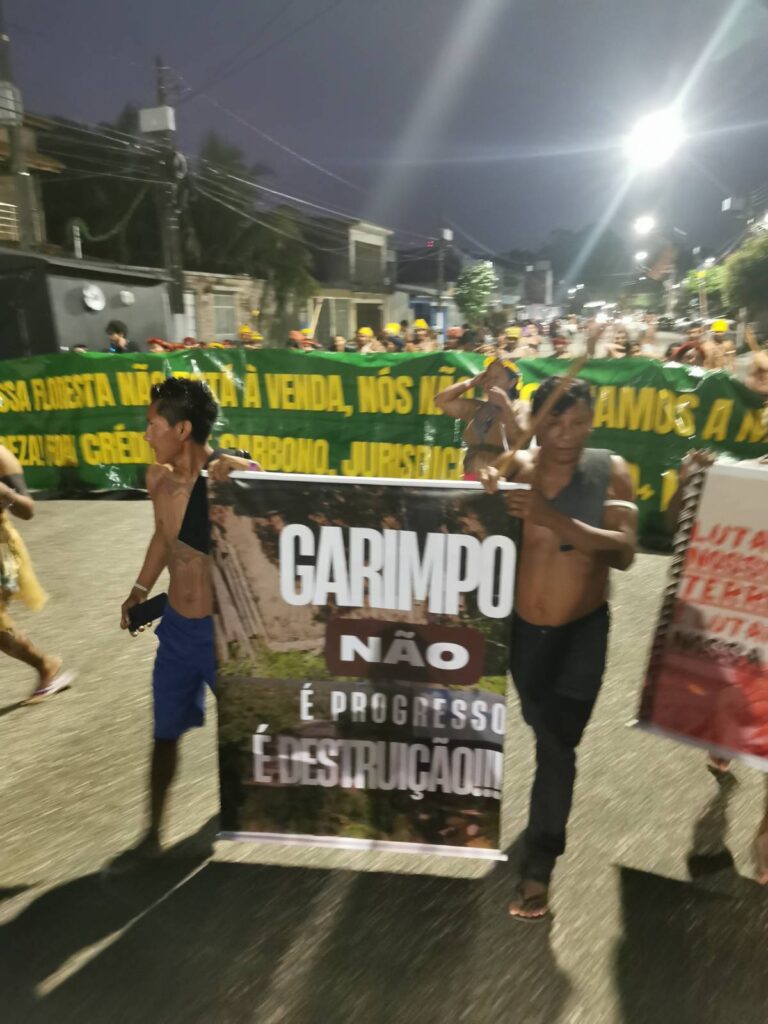
Today’s demonstration was organized by the Munduruku Ipereg Ayu Movement. “President Lula, we are here in front of the COP because we want you to listen to us,” the group stated. “Revoke Decree 12.600. Cancel Ferrogrão. Demarcate our lands. No more carbon credits. Our forest is not for sale,” they continued.
Marching from the COP Village—a space organized by Brazil’s Ministry of Indigenous Peoples and social organizations that accommodates about 3,000 Indigenous people from Brazil and other countries—the group headed to the gated entrance of the restricted UN area. On arrival, they faced locked gates with National Force police guarding the entrance to Belém’s City Park. One leader declared, “If the gate is closed, no one goes in and no one comes out.” More police continued to arrive at the scene.
Decree 12.600/2025, which launched the National Waterways Plan, is the protest’s main focus. It designates the Tapajós, Madeira and Tocantins rivers as priority cargo routes. For the Munduruku, this paves the way for further dredging and destruction of sacred rock formations. “It turns the river into a soy highway,” one leader said.
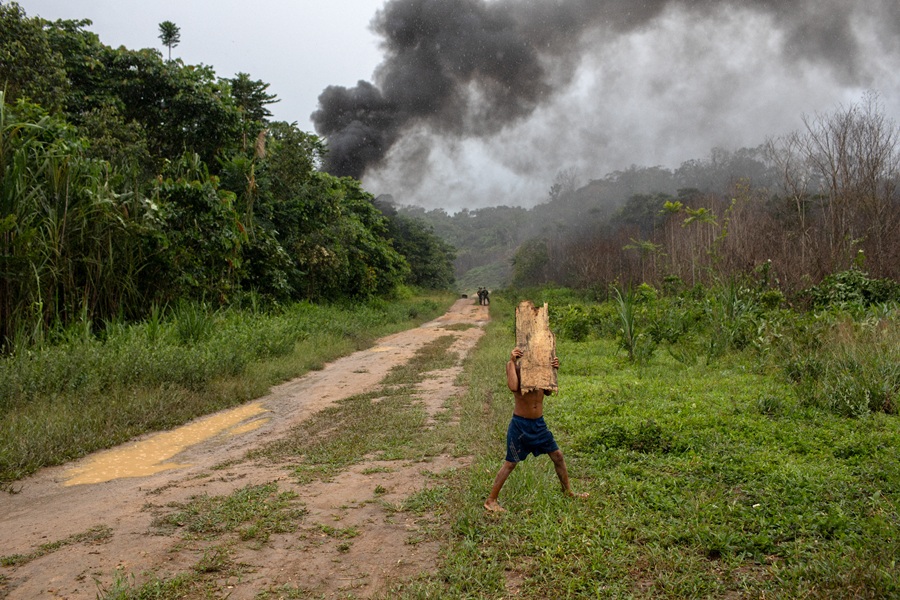
The Munduruku are also among those most affected by mercury contamination from gold mining on their lands.Munduruku leaders also reject carbon credit projects and REDD+ mechanisms being discussed at COP30. According to the movement, these measures let companies access Indigenous territories while failing to address the harms caused by industrial deforestation, mining, and waterways.
Figures from INESC show that 68% of federal infrastructure investment in the Amazon between 2010 and 2022 went to export corridors. In 2023, 47% of Brazil’s soybean exports passed through ports in the country’s north and northeast. Cargo transport on the Tapajós rose from 4,000 tons in 2019 to 167,000 tons in 2022. Movement leaders blame economic activity for dwindling fish stocks, polluted water, restricted river navigation and the recent disruptive effects of dredging.
The movement also calls for the definitive cancellation of Ferrogrão. The project would link Sinop (Mato Grosso) to Miritituba (Pará) for grain transport. Ministry of Transportation studies indicate cargo volume on the Tapajós could increase sixfold by 2049. Munduruku leaders warn this would mean more ports in the towns of Miritituba, Itaituba and Trairão, and greater dredging and pressure on their territory.
The Munduruku are also demanding the rapid demarcation of Indigenous lands—a process currently stalled at Brazil’s Ministry of Justice and the office of the President’s Chief of Staff. The movement links rising regional conflict to expanding soy cultivation.
This report was produced by Repórter Brasil as part of the Collaborative Socio-Environmental Coverage of COP30. Read the original in Portuguese here.