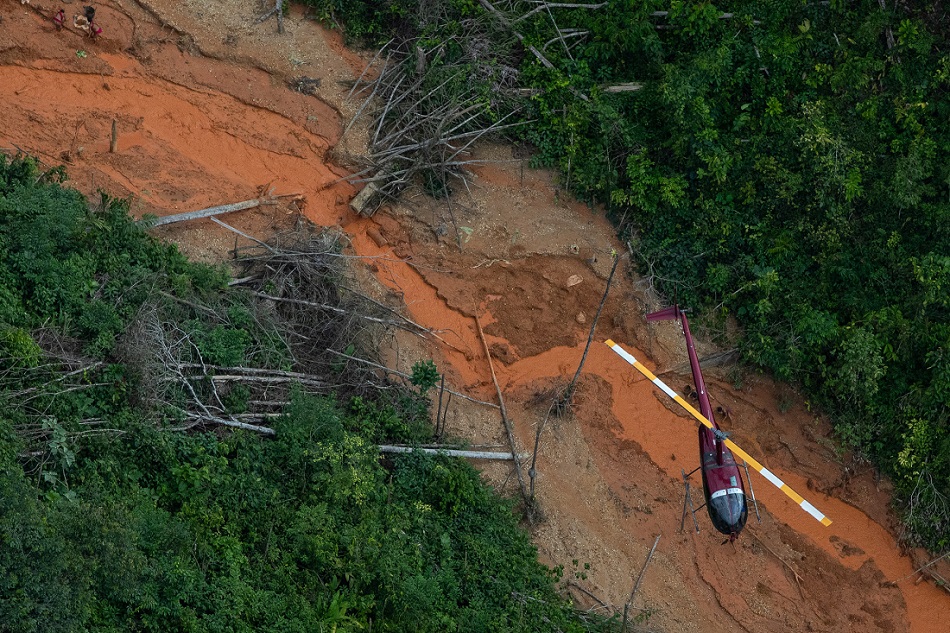

A NEW WAVE of mining waste may have reached rivers in the Waimiri Atroari Indigenous Territory, which borders one of the country’s largest open-pit mines, operated by Mineração Taboca in Presidente Figueiredo, Amazonas.
After heavy rains hit the region earlier this month, the Waimiri Atroari saw muddy stains flowing down a stream that runs through the mining area and empties into the Indigenous Territory.
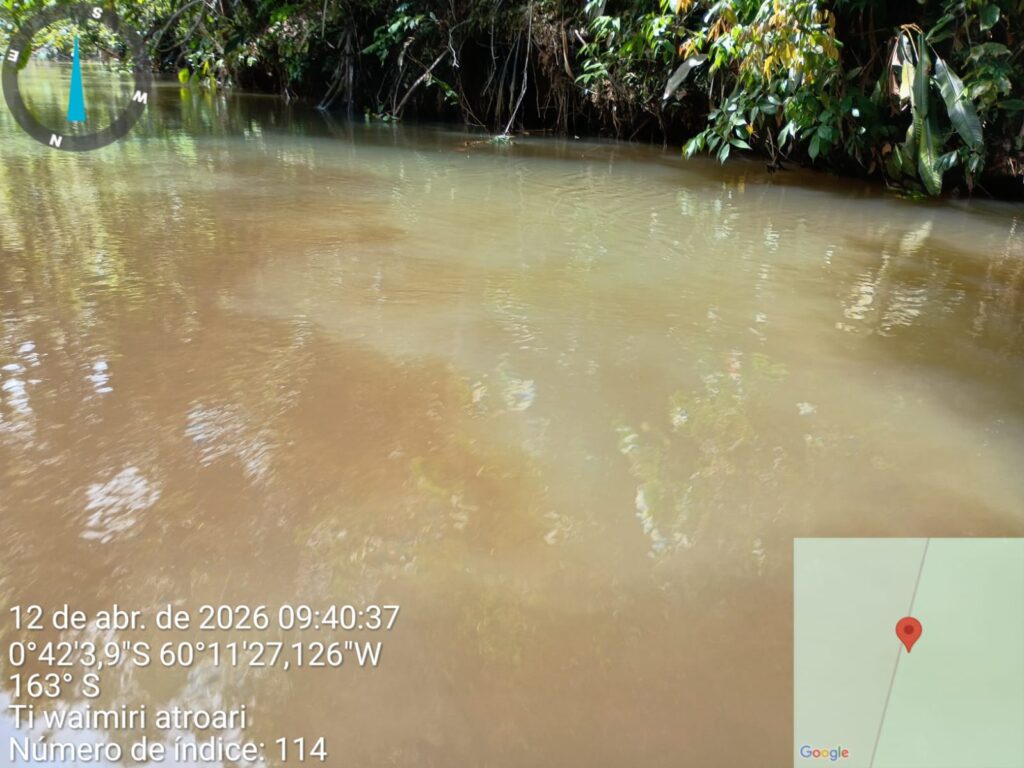
During environmental inspection operations carried out last week together with FUNAI (Brazil’s National Foundation of Indigenous Peoples), the Waimiri also noticed a “strong odor” in the Tiaraju stream and the Alalaú River, the main river in the Indigenous Territory.
According to the inspection teams, there was a “considerable increase in the muddiness of the water” as well as a “very strong odor,” which “affected the breathing of team members,” causing “a burning sensation when breathing and itching on the skin.” A similar situation had already been recorded in February.
The information is contained in an official letter sent last Wednesday (April 8) by the Waimiri Atroari to the Federal Prosecutor’s Office in Amazonas state (MPF-AM). The document was attached to the civil inquiry that is investigating whether Mineração Taboca is responsible for contaminating rivers in the Indigenous Territory.
The Federal Prosecutor’s Office investigation moved forward last year after a chemical analysis of the water detected traces of lead, arsenic and other potentially dangerous substances in the stream that feeds the Alalaú River. The case was revealed by Repórter Brasil in the reporting series Kinja: The Indigenous People Afraid of the River, produced in partnership with the Rainforest Investigations Network at the Pulitzer Center.
Mineração Taboca has been operating in the region for more than 40 years and is Brazil’s largest producer of refined tin, a metal used in the manufacture of metal alloys. It supplies the production chains of companies such as Toyota and Tesla.
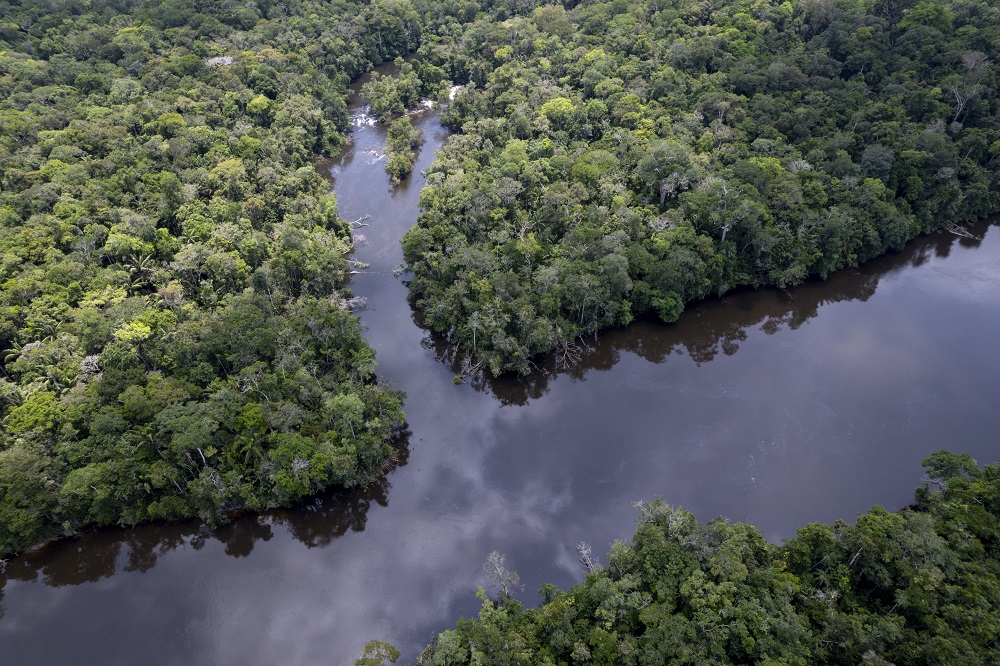
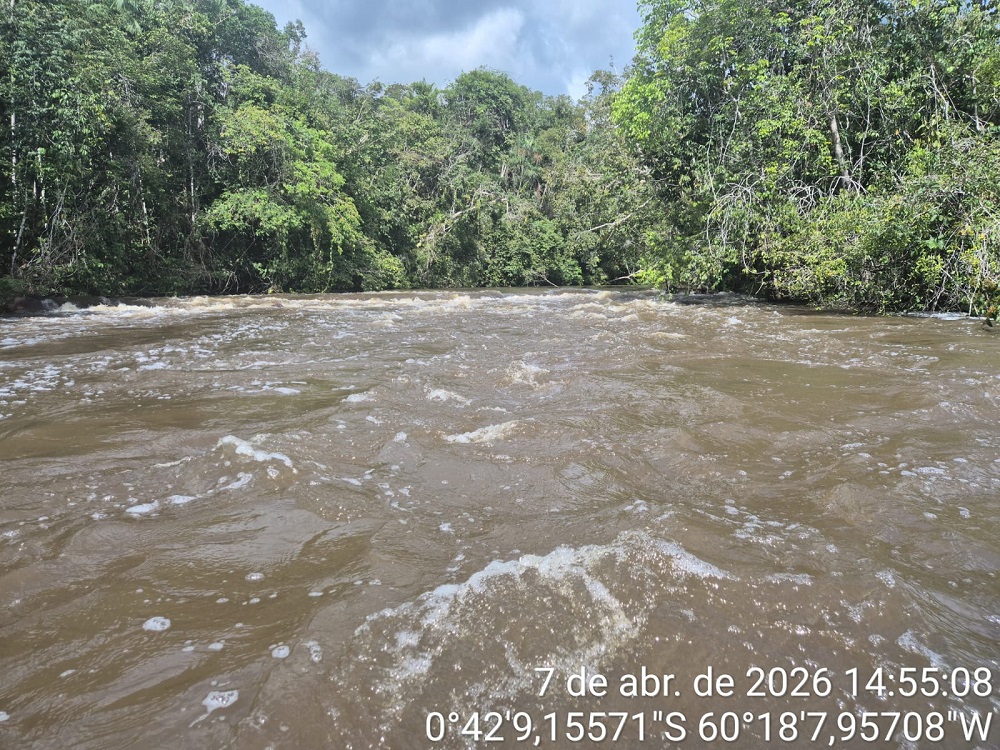
Asked about the case, Taboca denied any link between the alleged pollution stain and its mining activities, and highlighted the heavy rainfall in the region in early April. “The company clarifies that there was no record of the discharge of mud, sediment or tailings, nor any operational failure or abnormality in its structures. Water quality parameters, including turbidity, remain within the limits established by the applicable legislation,” the company said in a statement to Repórter Brasil (read the full statement).
Regarding the pollution records from February, Taboca said it sent technicians to inspect the area. “The information was formally reported to Indigenous representatives, at which time no anomalies were identified.”
As for the Federal Prosecutor’s Office investigation, the mining company said in March that “there is no evidence indicating a causal nexus” between the contamination identified in previous years and its operations. It also said that the chemical analysis report “contains methodological gaps that compromise the reproducibility of the information, as well as technical inconsistencies, which require further examination before any definitive conclusion can be reached.” The full statement is available at this link.
Indigenous people fear contamination of fish, the community’s main food source
“The Tiaraju is dead, it really is polluted here,” says Sanapyty Atroari in a video recorded during the river expedition last week.
“This is not a new concern for us. We want this to get better,” Sanapyty told Repórter Brasil. In previous episodes, the Kinja found dead fish in the river, as well as turtles and manatees.
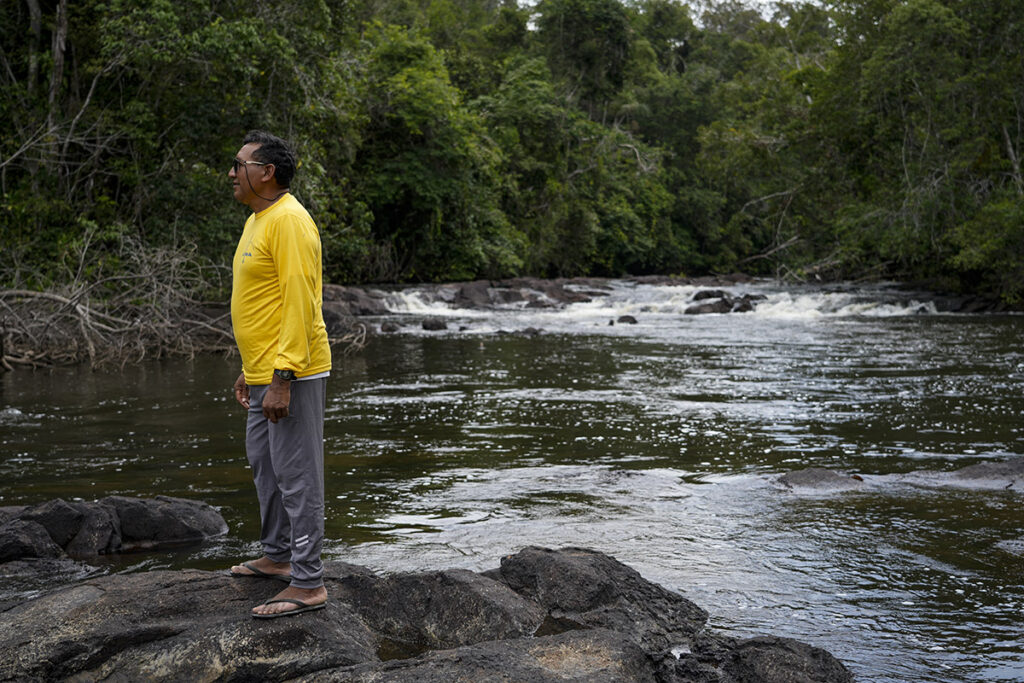
Repórter Brasil visited the Indigenous Territory in October 2025 and heard testimony from 22 community members. The Indigenous people have avoided drinking water from the river and even bathing in the Alalaú. They have also reported changes in the appearance of the fish, which they say have become “thinner, paler and more yellowish.” “The fish will disappear. And if the fish disappear, our people will disappear,” warns elder Akynamy Atroari.
“Although investigative measures and studies into the specific causes and their impacts are underway, to date there has been no solution capable of reassuring the Waimiri Atroari community and guaranteeing their safety in the traditional use of the water and the food source (fish) they have always depended on,” says the letter sent last Wednesday, signed by ACWA (the Waimiri Atroari Community Association).
For 40 years, the Kinja have denounced the devastation of their territory
The Kinja have lived with the devastation of their territory for more than four decades. Their population was nearly wiped out in the 1970s during the construction of highway BR-174. Years later, they would face the impacts of the Balbina hydroelectric dam — the plant’s reservoir flooded part of the Indigenous Territory, displacing one-third of the population.
In 1982, the exploitation of the Pitinga mine began. Taboca set up the operation in an area considered part of the Kinja’s traditional territory. The mining project was only made possible after a presidential decree reduced the size of the Indigenous Territory, removing the areas targeted for mineral extraction.
At the time, Taboca was part of the Paranapanema group and, since then, has faced recurring suspicions of pollution.
“Taboca dumps waste from Pitinga, and this has been causing a lot of illness (…) when our people eat fish, they get sick,” says a 1986 letter signed by two Indigenous leaders. A year later, the collapse of nine dams made headlines in Folha de S.Paulo: the tailings reached the Alalaú and Tiaraju rivers, “whose murky waters threaten the flora and fauna of the Amazon.”
In the statement sent to Repórter Brasil in March, Taboca said that “the operation at the time was under another company’s management, with no link to the current administration.” After being run for two decades by Peru’s Minsur group, Taboca was acquired in 2024 by the Chinese state-owned company China Nonferrous Metal Mining Group.
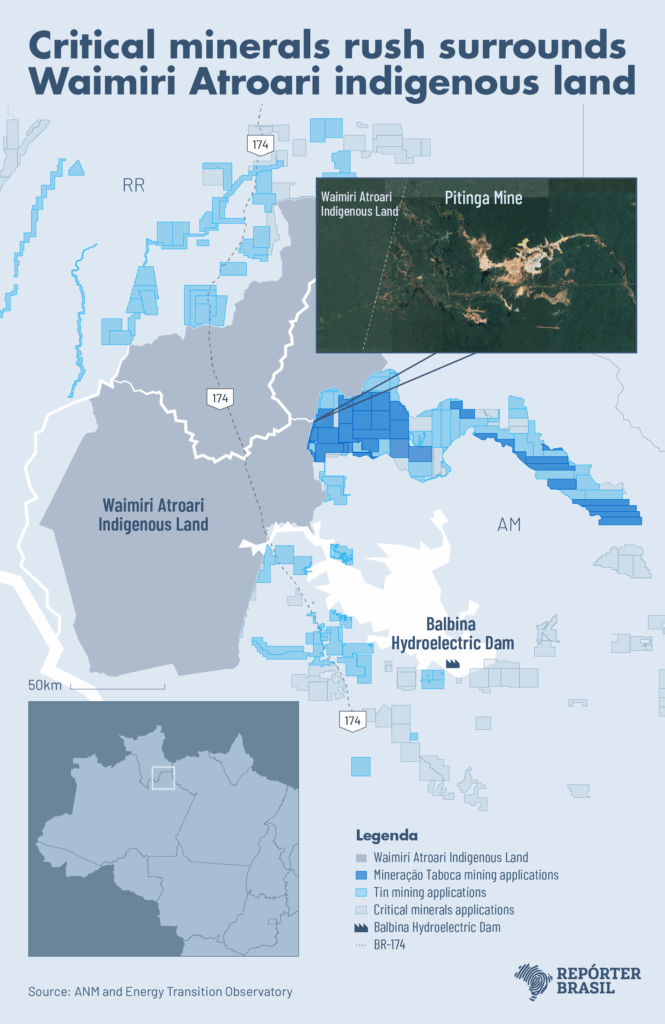
The community now fears that mining activity in the region could intensify amid the race for critical minerals. The Waimiri Atroari Indigenous Territory is surrounded by 62 mining applications for minerals considered essential to the defense, technology and renewable energy industries, according to data from Brazil’s National Mining Agency cross-referenced by the Energy Transition Observatory.
More than half of those applications — 33 cases — were filed in the last five years, between 2021 and 2025. The requests were submitted by 31 companies, and only Mineração Taboca currently has projects in operation. In addition to cassiterite, the ore used to produce tin, the company also extracts tantalum and niobium and is studying the extraction of rare earth elements.
This report was supported by the Rainforest Investigations Network at the Pulitzer Center. Learn more.

Editor’s note: This report was translated with the assistance of artificial intelligence.