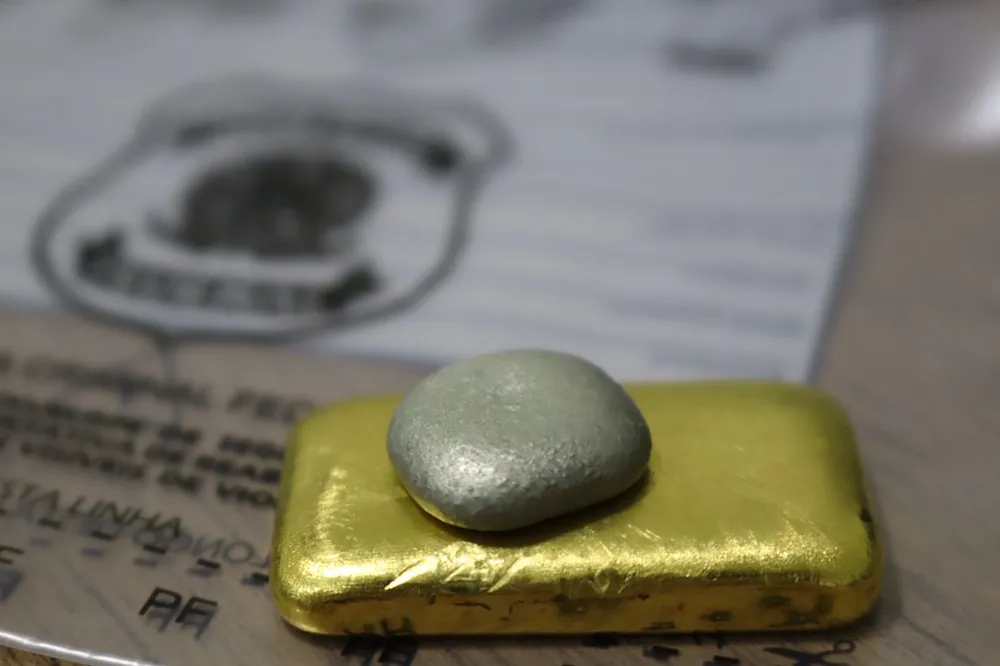

ITALIAN LAWMAKERS have asked Prime Minister Giorgia Meloni’s government to explain what measures the country has taken to combat imports of gold from Brazil that show signs of illegality. The request cites reports published by Repórter Brasil on how Italian refineries purchased gold from companies investigated for links to illegal mining operations in the Amazon.
The Parliamentary Question – the technical term for this type of request – was submitted on March 31 by MP Angelo Bonelli, of the Alleanza Verdi e Sinistra (Greens and Left Alliance) coalition. It was also signed by seven other lawmakers from the coalition and addressed to the ministers of the Interior, Economy and Finance, Environment and Energy Security, and Foreign Affairs.
The lawmakers want to know whether Italy’s current traceability and verification tools are adequate to address the risk of gold imports linked to environmental crimes, document forgery, and violations of Indigenous peoples’ rights. The parliamentary question also asks what initiatives the government intends to take, including through diplomatic channels, to prevent Italy from becoming a destination for gold illegally extracted from the Amazon.
Investigated suppliers
In June 2025, a report showed that the Italian refinery Italpreziosi had purchased the mineral from an importer under investigation in a scheme involving illegal gold extraction in Itaituba, in southwestern Pará state. According to police investigations, the criminal scheme involved Brazilian companies issuing false invoices — including in the names of deceased individuals — to conceal the true origin of the gold. Investigators say part of the product was extracted from illegal mining sites in the Munduruku Indigenous Territory.
In May 2024, Repórter Brasil had already shown that a shipment of 5 kilograms of gold powder mixed into 15 tonnes of charcoal had been purchased by another Italian refinery, Safimet, which specializes in precious metals refining. After finding the undeclared gold in the cargo, Brazil’s Federal Revenue Service at the Port of Santos blocked the export to Italy. Although the gold accounted for only 0.03% of the shipment’s total volume, it could have yielded BRL 1.9 million – nearly three times the value of the charcoal declared on the invoice.
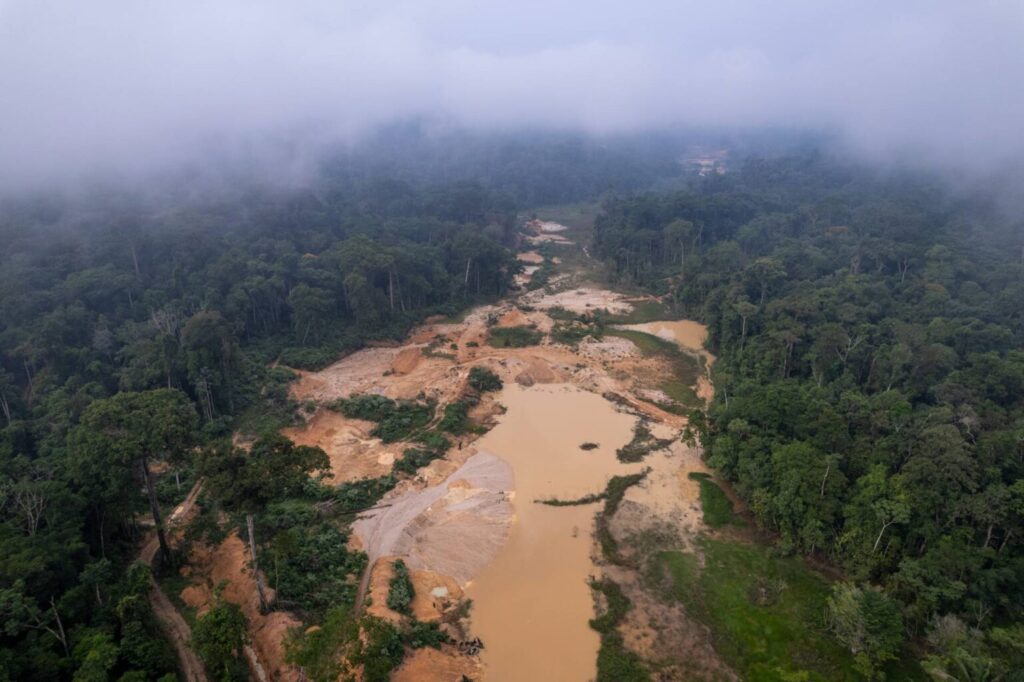
Three years earlier, Chimet, a major Italian precious metals refinery based in Arezzo, Tuscany, was identified in police investigations as a buyer of gold illegally extracted from the Kayapó Indigenous Territory in southern Pará. The scheme was uncovered in Operation Terra Desolata, carried out by Brazil’s Federal Police. Repórter Brasil showed that Chimet appeared in the supplier network of companies such as Apple, Google, and Microsoft.
All three companies were contacted by Repórter Brasil at the time the reports were published. Italpreziosi said it had found no indication of illegality in the gold purchased from the importer under investigation. Safimet said it had made a single purchase from the Brazilian company targeted by customs authorities at the Port of Santos and that it cancelled the deal after the material was seized by the Federal Revenue Service. Chimet, in turn, said that its gold purchases are accompanied by documentation certifying the metal’s lawful origin, but acknowledged “the risk that negative impacts may be associated with the trade and export of minerals from high-risk areas.”
Federal prosecutors opened an investigation
In December 2025, Brazil’s Federal Public Prosecutor’s Office in Amazonas state (MPF) opened an inquiry to investigate the actions of the Brazilian state, the National Mining Agency (ANM), and other public bodies and entities in combating the irregular export of gold.
The Italian refineries are not targets of the investigation. Still, the accumulation of allegations led prosecutors to seek explanations in order to understand what countries such as Italy and Switzerland are doing to prevent gold illegally extracted from the Amazon from entering their territories.
In March this year, the MPF sent a request for clarification to the Italian embassy in Brasília. The same request was also sent to the embassies of Switzerland, Belgium, and the United Kingdom. In the parliamentary question, lawmakers ask whether the Italian government is aware of that request.
Response may take time – or never come
Ministers have 20 days to respond to the Parliamentary Question. But that does not always happen. In some cases, parliamentary questions remain unanswered for years. That is what happened when the same issue first reached the Italian parliament, in 2022.
In September 2021, when Operation Terra Desolata became public and revealed the scheme linking clandestine Amazon miners to Chimet, the scandal reached Italy not only through the press, but also through official channels.
In February 2022, MP Devis Dori – who also signed this year’s parliamentary question – and three other lawmakers, all from the Greens and Left Alliance coalition, submitted a parliamentary question addressed to the same ministries. At the time, they wanted to know whether the government was aware of the facts revealed by the operation and what initiatives it intended to adopt to combat the illegal trade in precious metals.
Four years later, that parliamentary question still has not been answered. Contacted by the reporter, Dori said he had never received any reply from the government. He noted that the prime minister at the time, Mario Draghi, remained in office for only five months.
His colleague Cristian Romaniello, who signed the 2022 parliamentary question, also never received a response. “It was the Draghi government, but that does not mean the question could not have been answered by the governments that followed,” the lawmaker said.
Complaint against Chimet was shelved
At the same time, MP Angelo Bonelli – the same lawmaker now leading this year’s Parliamentary Question – formally filed a complaint in February 2022 with the Public Prosecutor’s Office in Arezzo, where Chimet is based. The complaint requested the opening of an investigation to determine whether the accusations raised by Brazil’s Federal Police had grounds under Italian law.
In response to Repórter Brasil, the Arezzo prosecutor’s office said the complaint had been registered “as fatti non costituenti reato” (“facts not constituting a crime”) and shelved in May 2022.
Bonelli himself was unaware that the complaint had been shelved. When informed by Repórter Brasil, he said that the main obstacle to investigating the purchase of illegal gold in Italy lies in traceability. According to him, when gold enters the country accompanied by formal Brazilian documentation, challenging its origin becomes difficult.“If those responsible are not identified, the cycle continues,” he said. In the lawmaker’s view, Europe is still falling short by failing to impose stricter controls on raw materials coming from areas marked by exploitation and deforestation.