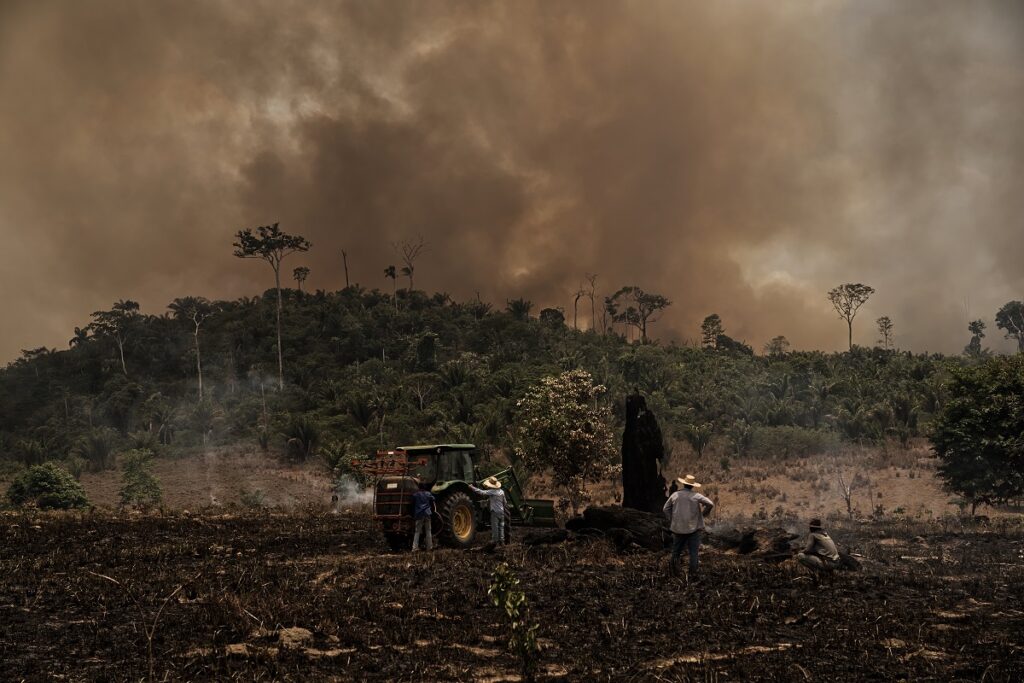

Leia as matérias completas: “Doador milionário da campanha de Bolsonaro é autuado por trabalho escravo no MT” e “Fazenda com trabalho escravo tem selo de boas práticas e elo com grifes de luxo“
GRUPO CERVI
O Grupo Cervi agradece a oportunidade de prestar esclarecimentos. Temos confiança na regularidade de nossos procedimentos e reafirmamos nosso compromisso com o cumprimento da legislação e das melhores práticas. As informações e esclarecimentos serão oportunamente apresentados.
BUNGE E VITERRA
A Bunge recebeu a informação do Grupo Cervi de que uma de suas fazendas teria sido alvo de fiscalização do Ministério do Trabalho, pela suposta submissão de trabalhadores a condições degradantes.
A fazenda em questão possui certificação Roundtable on Responsible Soy (RTRS) há mais de 3 anos e é regularmente auditada por terceira parte independente. Além disso, a Bunge solicitou esclarecimentos e informações adicionais ao produtor e seus assessores jurídicos e segue acompanhando o caso de perto – até o momento, não há qualquer conclusão sobre a apuração.
A Bunge não tolera quaisquer violações legais e que estejam em desacordo com suas políticas e procedimentos, mantendo mecanismos de monitoramento voltados à promoção de práticas responsáveis.
Além disso, seu Código de Conduta de Fornecedores comunica as expectativas da Bunge e orienta seus fornecedores a adotarem melhores práticas e a atuarem de acordo com os mais elevados padrões de ética e integridade, incluindo a proibição de qualquer forma de trabalho forçado ou de condições degradantes, em linha com os princípios e padrões internacionais refletidos na Política de Direitos Humanos da Bunge.
Até que haja conclusão sobre a apuração, a Bunge seguirá acompanhando o caso com a devida diligência, reafirmando seu compromisso de respeito aos direitos humanos, ética, integridade e sustentabilidade.
ADIDAS
adidas takes such allegations very seriously and is committed to respecting human rights throughout its value chain. Therefore, we immediately investigated the allegations and contacted our supplier Maral Overseas (“Maral”) to trace the cotton used in adidas products.
Based on the sourcing and production records, we can hereby confirm that the supplier did not use any cotton imported from Brazil for adidas products. Consequently, there is no connection whatsoever between the case described and adidas.
1) Reporter Brasil: Is Adidas able to trace the cotton used in products manufactured by Maral Overseas back to the farms where it was grown? Can the company determine whether cotton originating from Oscar Cervi’s operations or Fazenda Reata entered its supply chain?
We can confirm that no cotton originating from this operations has entered our supply chain. Maral Overseas (“Maral”) is a supplier that produces adidas apparel exclusively in India for the Indian market. Based on a comprehensive review of available sourcing and production records, we can confirm that no cotton imported from Brazil was used by the supplier for the production of adidas garments.
2) Reporter Brasil: Now that Adidas has been informed of this case, does the company intend to investigate the matter, contact Maral Overseas or other companies involved in the supply chain, or take any other action? We will include any measures adopted by the company in our report.
As a precautional measure, adidas will share this information with other material suppliers in the region and ask them to review their own cotton supply chains for any potential links to the farms identified in the investigation. So far, however, we have no indication of any connection.
3) Reporter Brasil: What due diligence procedures does Adidas apply to identify and prevent forced labor or other serious labor violations in its cotton supply chain, including among indirect suppliers and at farm level?
adidas has been working for many years and will continue working to strengthen visibility into cotton sourcing with suppliers and industry partners to enhance transparency, traceability, and human rights due diligence at the farm level.
Since 2018, adidas has been using only third-party certified cotton from standards such as Better Cotton Initiative and U.S. Cotton Trust Protocol, as well as organic cotton and recycled cotton.
adidas has actively engaged with the Fair Labor Association (FLA) and other partners through the “Harvesting the Future – Cotton in India” initiative. The program supports stronger farm-level due diligence through human rights risk assessments, grievance mechanisms, worker engagement, occupational health and safety improvements, and traceability initiatives.
We also participate in the Yarn Ethically and Sustainably Sourced (YESS) program, which includes assessments and continuous improvement initiatives to help identify, prevent, and mitigate potential forced labor risks in cotton sourcing.
LACOSTE
Lacoste unequivocally condemns any form of forced, compulsory or exploitative labor. All our suppliers are required to comply with, and ensure that their own suppliers comply with, our Supplier Code of Conduct, which strictly prohibits such practices.
In addition, Lacoste has implemented robust cotton traceability processes, enabling us to trace the cotton used in our products back to the farms where it was grown.
Based on the verification conducted following your enquiry, we can confirm that no cotton originating from Fazenda Reata has been used in the manufacture of Lacoste products.
We appreciate you bringing this matter to our attention. We remain committed to continuously strengthening the traceability, integrity and human rights due diligence processes across our value chain.
Levi Strauss & Co.
Levi Strauss & Co. (LS&Co.) is committed to human rights and labor rights wherever we operate. LS&Co. has made it clear to all of our suppliers globally that LS&Co. cannot accept any materials produced using forced labor or managed by entities involved in forced labor.
LS&Co. requires all third-party contractors, authorized subcontractors and licensees that manufacture or finish products for it or other parties, to comply with the company’s Supplier Code of Conduct (SCoC), which is available publicly online. To meet the company’s expectations, suppliers are provided an SCoC Implementation Guidebook, which is also publicly available, covering the technical implementation steps for LS&Co. requirements and trained on a regular basis.
On an ongoing basis, LS&Co. reviews all supplier relationships to determine if any supplier, or their sub-suppliers or subsidiaries, have links to forced labor. LS&Co. has deployed various technologies as part of the company’s global supply chain due diligence efforts. And while an initial review shows no active connections between the entities mentioned in this query, we are investigating further to ensure our partners are in full compliance with our Supplier Code of Conduct.
Better Cotton Initiative (BCI)
The BCI standard clearly rules out any farms that practice forced labour from participating in our programme and the Better Cotton Initiative will always investigate allegations of this nature.
We can confirm that the farm in question has not been enrolled in our programme in Brazil since 2024 and is not licensed or certified to sell BCI Cotton.
Viterra has been a member of BCI since 2022 and as of last year, through an acquisition, has fallen under the Bunge Netherlands BV membership.
We take all worker rights-related allegations extremely seriously as this is a key principle in our farm-level standard. When a potential breach of our Member Code of Practice is alleged, as a first step and in accordance with our Monitoring Protocol, we seek clarification from the relevant member before determining appropriate action.
We will therefore share these allegations with Bunge to seek their input before deciding if any further action is necessary.
VIBRA
A Vibra possui uma política de compliance rigorosa para parceiros e, após tomar conhecimento das informações divulgadas pela imprensa, solicitou esclarecimentos formais à Bunge sobre os fatos noticiados.
Em sua manifestação, a Bunge informou que a fazenda mencionada possui certificação Round Table on Responsible Soy (RTRS) há mais de três anos e é regularmente auditada por uma terceira parte independente. A empresa informou ainda que solicitou esclarecimentos adicionais ao produtor e seus assessores jurídicos e que acompanha o caso, ressaltando que, até o momento, não há conclusão sobre a apuração.
Com relação ao projeto de Combustível Sustentável de Aviação (SAF) desenvolvido em parceria com a Petrobras e a Vibra, a Bunge esclareceu que a propriedade mencionada não integra a cadeia de fornecimento da matéria-prima utilizada no projeto. Informou também que a cadeia associada à iniciativa está sujeita à certificação internacional ISCC CORSIA, cujas auditorias verificam requisitos de rastreabilidade, sustentabilidade, direitos humanos e condições de trabalho em todos os elos envolvidos.
A Vibra acompanha o tema e, em se confirmando irregularidades que violem nossos princípios e preceitos de integridade empresarial, respeito aos direitos humanos e conformidade aplicáveis à relação contratual, o Compliance e a Governança da companhia adotarão as medidas cabíveis previstas em seus normativos internos.
Maral Overseas
1) Repórter Brasil: Is Maral Overseas able to trace cotton purchased from Viterra to the farms where it was produced? Can the company determine whether any cotton originating from Oscar Cervi’s operations or Fazenda Reata entered its supply chain?
MOL Response: Yes, Maral Overseas Limited has the capability to trace the farm-level origin of Brazilian cotton through the ABRAPA (Brazilian Cotton Producers Association) traceability system. As part of our verification, we have reviewed the traceability details of all Brazilian cotton lots sourced from Viterra. Based on our verification, we confirm that none of the cotton purchased by Maral Overseas from Viterra has been linked to the operations of Oscar Cervi or Fazenda Reata.
2) Repórter Brasil: Now that Maral Overseas has been informed of this case, does the company intend to take any action? If so, we will include that information in our article.
MOL Response: Maral Overseas has always maintained a strong commitment to responsible sourcing, supply chain transparency, and traceability. In fact, the availability of farm-level traceability through the ABRAPA system was already considered an important criterion in our supplier selection and sourcing process for Brazilian cotton from Viterra.
Nevertheless, following the concerns brought to our attention, we are further strengthening our existing due-diligence and verification processes. As part of this enhancement, we intend to increase direct engagement and, where practicable, personal visits to farms, along with obtaining appropriate undertakings and confirmations from relevant suppliers regarding responsible sourcing and traceability.
These additional measures are intended to further strengthen the robustness and transparency of our cotton supply chain and reinforce our zero-tolerance approach toward any sourcing associated with identified human-rights or other serious responsible sourcing concerns.
3) Repórter Brasil: When did Maral Overseas most recently purchase cotton exported from Brazil by Viterra, and what was the volume of the purchase?
MOL Response: Our most recent purchase of Brazilian cotton from Viterra was invoiced on 28 November 2025, with a total quantity of 242121kg. For your information, cotton sourced from Viterra represents less than 2% of our total cotton procurement volume. Furthermore, the cotton sourced from Viterra was BCI-certified, reflecting our commitment to responsible and socially compliant sourcing practices. The Better Cotton Initiative (BCI) framework promotes improved social, environmental, and responsible practices throughout the cotton supply chain
In view of the above clarification and our verification of the available farm-level traceability, we respectfully request you to consider Maral Overseas Limited’s position that there is no identified link between the Brazilian cotton purchased by Maral Overseas from Viterra and the victim farm, Fazenda Reata.
Thank you once again for your understanding, cooperation, and for providing us with the opportunity to clarify our position. We remain committed to responsible sourcing, supply chain transparency, and continuous strengthening of our due-diligence practices.